
MINI1300 Antenna Analyzer
4.4Editor score
Wide frequency coverage
Touchscreen interface
Portable compact design
Finding the right cellular signal meter is essential for anyone installing or optimizing antenna systems. These devices provide real-time feedback on signal strength and quality, ensuring you position your antenna correctly for the best possible connection.
We have carefully evaluated ten different models available on the market today. Our comparison focuses on accuracy, ease of use, frequency coverage, and value for money across various professional and consumer-grade options.
Each product listed below offers unique features tailored to different installation needs. Please note that prices and availability may change over time, so checking the latest details before purchasing is always recommended for the best deal.
4.4Editor score

4.3Editor score

4.6Editor score
As an Amazon Associate we earn from qualifying purchases.
The following table provides a side-by-side comparison of all ten products reviewed in this guide. Use this overview to quickly identify which model fits your specific technical requirements and budget constraints.


The SureCall Five-Band RF Signal Meter stands out as a reliable choice for professionals installing cell phone signal boosters. With a solid rating of 4.3 stars, this device delivers consistent performance across multiple frequency bands commonly used by major carriers.
We may earn a commission when you buy through this link, at no additional cost to you.
Its five-band coverage includes PCS, Cellular, AWS, and LTE frequencies, ensuring comprehensive testing during antenna aiming. The high receiving sensitivity of -110dBm allows users to detect weak signals that might otherwise go unnoticed during setup.
While the price is higher than some competitors, the rechargeable design and controllable backlight add significant value for field use. The working time of 2.5 to 3.5 hours is sufficient for most installation tasks without interruption.
This meter is ideal for installers who need a dedicated tool for specific cellular bands. If you prioritize accuracy and band-specific data over cost, this model is the recommended choice for your toolkit.
The five specific bands ensure compatibility with most US carriers, making it versatile for different regions and service providers.
Features like the controllable backlight and rechargeable batteries make it practical for outdoor or low-light installations.
We may earn a commission when you buy through this link, at no additional cost to you.
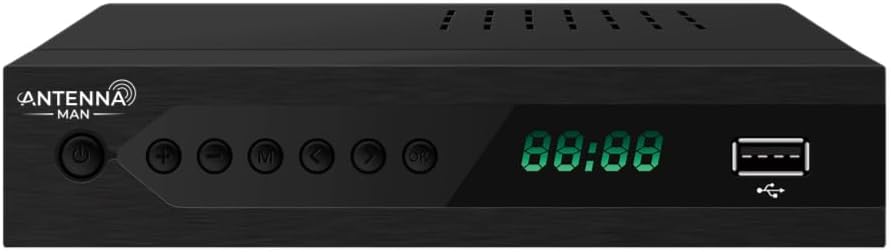
The Antenna Man Signal Meter offers a unique approach to signal measurement by combining an ATSC digital converter box with a tuner. With a rating of 3.8 stars, it provides basic functionality for users focused on over-the-air TV antenna installation.
We may earn a commission when you buy through this link, at no additional cost to you.
Its primary strength lies in the real-time signal strength display, which helps users adjust antenna direction quickly. The plug-and-play nature means no complex configuration is required, making it accessible for DIY enthusiasts.
However, the lower rating suggests some limitations in precision compared to specialized RF meters. It is best suited for general TV antenna alignment rather than detailed cellular network troubleshooting or professional cellular testing.
For homeowners looking to optimize their TV reception without breaking the bank, this device is a solid option. It balances cost and functionality for those who primarily need to aim a TV antenna effectively.
The plug-and-play design eliminates the need for technical knowledge, allowing anyone to start testing immediately.
This tool is tailored for ATSC signals, so it may not provide the depth needed for cellular frequency analysis.
We may earn a commission when you buy through this link, at no additional cost to you.
The Berkeley Varitronics Octopus 4G LTE is a top-tier device for professionals requiring precise cellular data metrics. Boasting a high rating of 4.6 stars, it offers true RSRP, RSRQ, and RSSI measurements that are critical for advanced network planning and EV charging station setups.
We may earn a commission when you buy through this link, at no additional cost to you.
One of its most valuable features is the ability to function without SIM cards, phones, or apps. This independence streamlines testing in remote or controlled environments, ensuring reliable data without external dependencies.
The premium price point reflects the high-quality manufacturing and US-based design. While not necessary for casual users, this level of precision is justified for industrial IoT, alarm installs, and large-scale booster projects.
If you need detailed LTE signal parameters and value domestic manufacturing, this meter is the best investment available. It delivers the accuracy required for mission-critical wireless infrastructure deployment.
True RSRP and RSRQ readings provide a granular view of signal quality that generic meters often miss.
Eliminating the need for SIMs reduces setup time and potential compatibility issues during field tests.
We may earn a commission when you buy through this link, at no additional cost to you.
The RF Explorer Pro Spectrum Analyzer is a powerhouse for engineers and RF professionals who need detailed spectrum data. It combines spectrum analysis, power metering, and a tracking generator in a compact, portable device designed for both field and lab use.
We may earn a commission when you buy through this link, at no additional cost to you.
The 8-inch high-definition touchscreen makes visualizing complex RF signals much easier. Features like GPS heatmaps and waterfall displays provide deep insights into interference patterns and signal coverage across wide areas.
While it lacks a specific customer rating in the data, its technical capabilities are extensive. The modular design allows users to choose frequency ranges that match their specific needs, offering flexibility that fixed-range meters do not.
For advanced users troubleshooting interference or analyzing complex RF environments, this tool is unmatched. It is a significant investment but delivers professional-grade performance that justifies the cost for serious practitioners.
The large touchscreen and high resolution ensure clear data visualization even in bright outdoor conditions.
Selecting frequency ranges based on project needs saves money and reduces equipment weight during transport.
We may earn a commission when you buy through this link, at no additional cost to you.
The NetAlly AirCheck G3 Pro Kit is a comprehensive solution for modern wireless network testing. With a perfect 5-star rating, it excels in verifying Wi-Fi 6/6E and Bluetooth/BLE networks, making it ideal for environments where cellular and Wi-Fi coexist.
We may earn a commission when you buy through this link, at no additional cost to you.
Its tri-band physical location detection and site survey capabilities allow for remote collaboration. This feature saves travel costs and speeds up troubleshooting, which is particularly useful for large-scale enterprise installations.
The kit includes an external directional antenna and spectrum analyzer, providing a complete set of tools for professionals. However, its focus on Wi-Fi means it may not replace a dedicated cellular signal meter for pure RF cellular aiming tasks.
If your work involves complex Wi-Fi and cellular integration, this kit offers unmatched value and performance. The perfect rating confirms its reliability and effectiveness for critical network services.
Remote collaboration tools allow technicians and engineers to solve issues together without being on-site.
Everything from the mainframe to the carrying bag is included, ensuring you have all accessories needed.
We may earn a commission when you buy through this link, at no additional cost to you.
The Extech 480836 RF EMF Strength Meter is designed for high-frequency measurements including mobile phones and base stations. With a 4.3-star rating, it provides non-directional isotropic measurements, ensuring accurate readings regardless of the device orientation.
We may earn a commission when you buy through this link, at no additional cost to you.
This meter is ideal for checking EMF levels and microwave leakage, which is useful for safety inspections. The three-channel triaxial probe captures signals from all directions, reducing the risk of missing weak sources.
Manual store and recall features allow users to save up to 99 sets of data for later analysis. While it may lack the band-specific details of cellular meters, it offers broad coverage for general RF assessment.
For those concerned with overall RF exposure or general safety, this meter is a reliable tool. It balances ease of use with sufficient range to handle most environmental monitoring tasks.
The isotropic probe ensures you capture signals from any angle without needing to rotate the device constantly.
Saving multiple measurement sets helps in documenting changes over time or comparing different locations.
We may earn a commission when you buy through this link, at no additional cost to you.
The MINI1300 Antenna Analyzer is a standout budget option for those needing frequency coverage up to 1300MHz. With a 4.4-star rating, it offers a large 4.3-inch TFT LCD touchscreen, making it easy to read data in various lighting conditions.
We may earn a commission when you buy through this link, at no additional cost to you.
Its frequency sweep and SWR measurement capabilities make it useful for checking antenna tuning before final installation. The compact and portable design ensures you can carry it easily to different locations for on-site testing.
One limitation is the firmware that cannot be updated, which might limit future functionality. However, for current needs covering HF, VHF, and UHF bands, it provides excellent value and performance for its price point.
If you are looking for a cost-effective tool to verify antenna health and signal quality, this analyzer is a top choice. It delivers essential features without the high cost of professional-grade spectrum analyzers.
The large touchscreen simplifies interaction, reducing the learning curve for new users.
Covering up to 1300MHz means it supports a wide range of common wireless standards and amateur radio.
We may earn a commission when you buy through this link, at no additional cost to you.
The SA6 6GHz Portable Spectrum Analyzer combines spectrum analysis and signal generation in one compact device. Its broad frequency range from 35 to 6200MHz supports testing for WiFi, LTE, and various cellular standards, making it highly versatile for different projects.
We may earn a commission when you buy through this link, at no additional cost to you.
The 3.2-inch color touchscreen allows for intuitive operation, while physical buttons offer alternatives for field use. Battery life is estimated at 3 to 4 hours, which is reasonable for short-term testing sessions.
PC connectivity via USB Type-C enables real-time logging and analysis, extending its utility beyond standalone use. The lightweight 380g design makes it easy to carry for engineers and technicians on the move.
For users needing both analysis and generation capabilities in a single unit, this analyzer is a practical solution. It balances performance with portability, making it suitable for field troubleshooting and workshop diagnostics.
Integrating a generator saves space and cost compared to buying separate devices for analysis and testing.
Connecting to a PC allows for detailed reporting and long-term signal monitoring without manual entry.
We may earn a commission when you buy through this link, at no additional cost to you.
The For Sa6 6GHz Handheld For Spectrum Analyzer Signal Generator WiFi/LTE is a rugged tool designed for field evaluations. It covers a comprehensive RF analysis range, supporting WiFi, LTE, and other common technologies for efficient signal assessment.
We may earn a commission when you buy through this link, at no additional cost to you.
Its integrated tracking generator delivers stable output, enabling SWR and return loss measurements when paired with appropriate accessories. The compact housing is energy efficient, making it suitable for technicians working in tight spaces.
Real-time spectral measurement with rapid scan speeds allows for quick RF environment assessments. While the accessory list depends on specific kits, having everything needed to start analyzing immediately is a significant convenience for new users.
For hobbyists and maintenance teams needing a reliable handheld device, this analyzer offers great performance. Its rugged design and included accessories make it ready to use right out of the box.
The compact housing is built to withstand field conditions, ensuring longevity in demanding environments.
Fast scan speeds reduce the time needed to diagnose interference or signal issues on-site.
We may earn a commission when you buy through this link, at no additional cost to you.
The Channel Master TV Antenna Signal Strength Meter is designed for precise over-the-air antenna alignment. With a rating of 3.9 stars, it displays RF signal level and signal to noise ratio, which are critical for achieving a stable TV signal.
We may earn a commission when you buy through this link, at no additional cost to you.
The color touch-screen display provides an intuitive interface for homeowners and installers alike. A built-in rechargeable battery ensures you are not tethered to a power source during antenna adjustments.
Accessories like a stylus pen and protective carrying case add to its usability and durability. While it is specific to TV frequencies, this specialization ensures it performs well for OTA tasks without unnecessary complexity.
If your goal is to optimize TV reception, this meter offers clear feedback on signal quality. It simplifies the aiming process by providing direct SNR data to help you find the best position.
Displaying SNR helps users understand signal quality beyond just strength, ensuring a stable picture.
The stylus and carrying case ensure the device is protected and easy to use in various conditions.
We may earn a commission when you buy through this link, at no additional cost to you.
Choosing the right signal meter depends on your specific needs, from simple TV aiming to complex cellular network optimization. This guide outlines key factors to consider before making a decision.
Ensure the device covers the bands you need to test. Cellular meters should support 4G LTE and 5G frequencies, while general RF tools may offer broader ranges. Check specifications to match your carrier or service requirements.
Select a meter with frequency ranges that align with your target signals.
Precision is critical for professional installations. Look for devices that provide specific metrics like RSRP or signal-to-noise ratio rather than just bar graphs. High sensitivity ensures you detect weak signals effectively.
Prioritize accuracy to ensure reliable results during antenna setup.
Interfaces vary from simple displays to complex touchscreens. Consider whether you need advanced data logging or just real-time feedback. A clear display and intuitive controls save time in the field.
Choose a device that matches your technical expertise.
Battery life and weight matter for outdoor work. Rechargeable batteries and lightweight designs make carrying the device easier. Ensure the unit can withstand typical field conditions.
Opt for portability if you work on-site frequently.
Some meters allow you to save or export measurement data. This feature is useful for reporting and long-term analysis. USB connectivity can facilitate transfer to computers for further study.
Look for logging capabilities if documentation is important.
Field equipment must be rugged. Check if the device has protective casing or water resistance. A sturdy build ensures the meter survives drops or harsh weather during installation.
Invest in durability to protect your investment.
Verify that the meter works with your existing hardware. Some require specific adapters or antennas to function correctly. Ensure all necessary components are included or available.
Check compatibility to avoid additional costs or complications.
Prices range widely from basic tools to professional analyzers. Determine your spending limit and compare value for money. Sometimes higher-priced models save time or offer better long-term utility.
Balance cost with the features you truly need.
First, fully charge the battery before heading to the installation site. A dead battery can disrupt the aiming process and delay the job. Verify that all accessories like cables or adapters are packed securely.
Second, connect the meter to your antenna using the appropriate coaxial cable. Turn on the device and allow it to initialize before starting measurement. Observe the display as you rotate the antenna to find the strongest signal direction.
Third, clean the device after each use to remove dust or moisture. Store it in a protective case to prevent physical damage. Regular maintenance ensures the device remains reliable for future projects.
A cellular signal meter is used to measure the strength and quality of cellular signals at a specific location. It helps users find the best direction for an antenna to optimize signal reception for boosters or home networks.
Generally, no. TV antennas operate on different frequencies than cellular networks. Using a TV meter for cellular signals may not provide accurate readings. It is best to use a meter designed for the specific frequency bands you need.
Most dedicated RF signal meters do not require a SIM card as they measure raw signal levels directly. Some smartphone apps require a SIM, but professional hardware usually functions independently.
Accuracy varies by model and price. Professional-grade meters with high sensitivity provide more precise readings. Lower-cost models may give general trends rather than exact decibel values, which is often sufficient for basic aiming.
Look for frequency range, resolution bandwidth, and display quality. A wider range allows testing of more signals. Good resolution helps in identifying interference patterns that might affect performance.
Basic signal meters are very user-friendly with simple interfaces. Spectrum analyzers may require some technical knowledge to interpret complex data. Most manufacturers provide guides to assist with setup and usage.
Long battery life ensures you can complete measurements without interruption. Rechargeable designs reduce downtime and are more environmentally friendly than disposable batteries. Look for models offering several hours of continuous use.
Place the antenna outside or near a window with a clear view of the signal source. Avoid obstructions like metal buildings or dense trees. Aim the antenna toward the nearest cell tower or signal booster for maximum strength.
We reviewed ten top models ranging from budget-friendly options to professional analyzers. The SureCall Five-Band RF Signal Meter leads as a reliable all-rounder, while the Berkeley Varitronics Octopus offers premium precision for specialists.
Consider your specific needs regarding frequency bands and data metrics before purchasing. A budget analyzer like the MINI1300 serves hobbyists well, but professionals may require the advanced tools found in spectrum analyzers.
Remember to check current prices and availability as they can change frequently. Investing in the right tool will improve the efficiency and quality of your antenna aiming projects significantly.