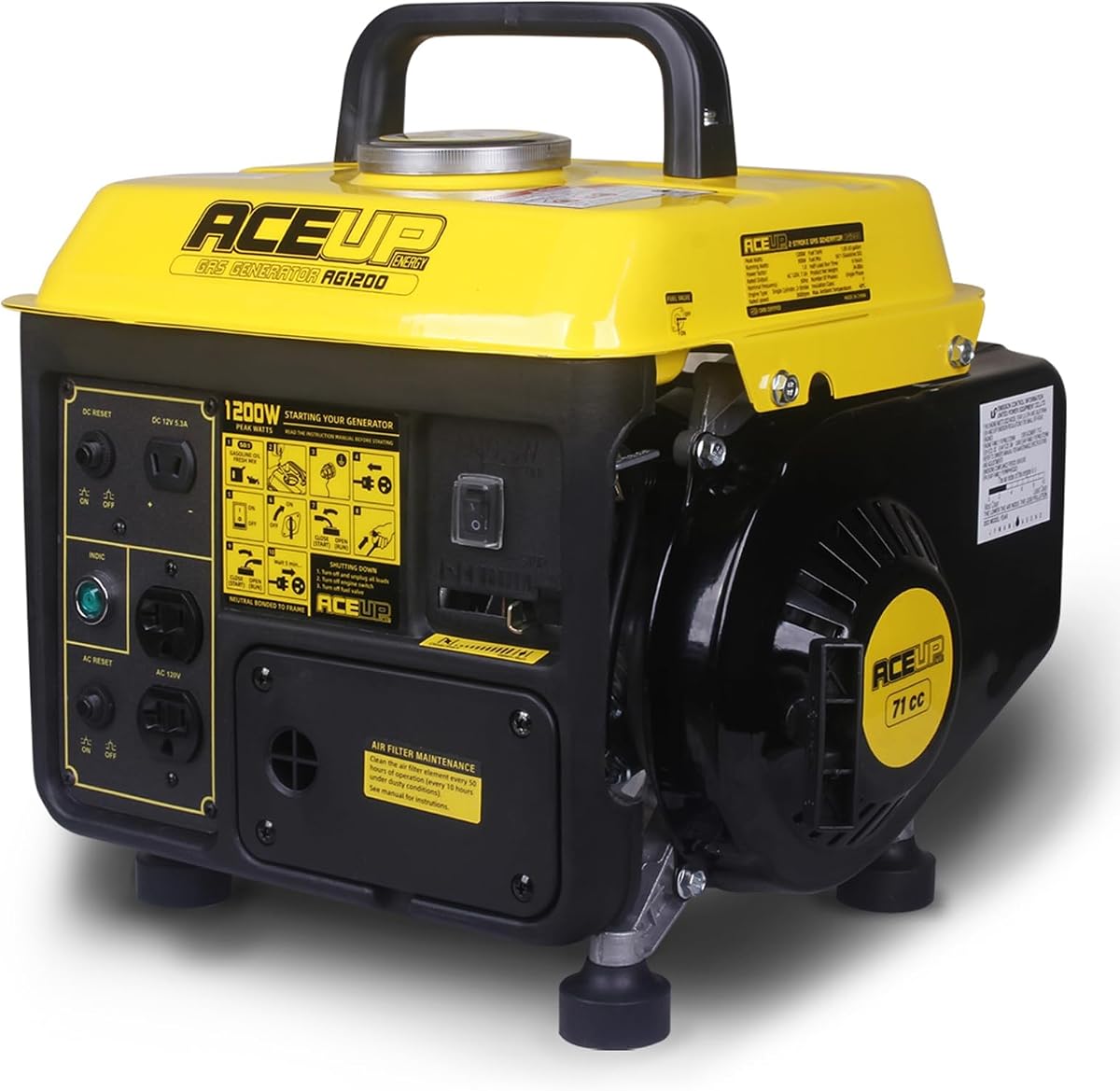
Aceup Energy 1200W Generator
4.1Editor score
900 running watts power
Ultralight 35 pound design
6 hour runtime at half load
This guide compares the top ten best cheap gas generator models for 2026, evaluating power output, runtime, noise levels, and portability to help you find the
Finding a reliable power source without breaking the bank is essential for many homeowners and outdoor enthusiasts. A cheap gas generator offers an affordable solution for emergency backups, camping trips, and job sites where grid power is unavailable or insufficient for your needs.
We compared ten top-rated models based on their power output, runtime efficiency, noise levels, and portability features. Each product was evaluated against strict criteria to ensure you get the best value for your investment while maintaining safety and performance standards.
Each pick highlights specific strengths and ideal use cases to help you decide quickly. Note that product availability and stock levels can change frequently, so checking current listings ensures you get the most up-to-date information before making your final purchase decision today.
4.1Editor score

4.6Editor score

4.8Editor score
The following table provides a side-by-side comparison of all ten selected generators. Use this overview to quickly identify which model matches your specific power requirements and portability needs.


This model stands out as a top performer in the budget category due to its strong power output and impressive runtime. With over 3000 running watts and an inverter design, it safely powers sensitive electronics like laptops and smartphones during outages or camping trips.
We may earn a commission when you buy through this link, at no additional cost to you.
The standout quality here is its runtime efficiency. At low loads, it can run for up to 14 hours on a single tank. This extended usage reduces the frequency of refueling stops, making it ideal for overnight use or long weekend trips where fuel access might be limited.
While it offers significant power, it does not support dual fuel options, limiting you to gasoline. Additionally, the open frame design is louder than premium inverter units. However, at 72 dBA, the noise remains manageable for most outdoor residential areas.
If you need a reliable home backup or RV power source without paying premium prices, this generator delivers excellent value. Its balance of power, portability, and efficiency makes it a smart choice for budget-conscious buyers seeking consistent performance.
The 30A outlet allows direct RV connection or transfer switch setup for essential home circuits like refrigerators and lights.
Eco mode automatically adjusts engine speed based on demand to maximize fuel efficiency during low power draw periods.
We may earn a commission when you buy through this link, at no additional cost to you.
This unit shares the same robust core specifications as the base model but adds a convenient fuel gauge for better monitoring. It is an excellent choice for users who want to track fuel levels without guessing how much is left in the tank.
We may earn a commission when you buy through this link, at no additional cost to you.
Its key strengths lie in its consistent power delivery and user-friendly features. The fuel gauge helps prevent unexpected shutdowns during critical usage. The 14-hour runtime at low load ensures you can power essentials through long outages without constant refueling.
The primary trade-off is that it remains a gasoline-only model. If you need propane flexibility for safety or storage reasons, this might not be the best fit. The noise level is typical for open frame generators.
For those prioritizing ease of use and reliable backup power for home or RV needs, this model is a strong contender. The addition of the fuel gauge provides peace of mind during extended operations.
The visible fuel gauge allows you to check fuel levels at a glance ensuring you are always prepared for refueling.
With 4400 peak watts it handles larger appliances and tools simultaneously without overloading the system.
We may earn a commission when you buy through this link, at no additional cost to you.
This generator is ideal for users needing a very small, budget-friendly power source for light tasks. Its ultralight design makes it incredibly easy to carry and transport to remote campsites or small work areas where larger units would be cumbersome.
We may earn a commission when you buy through this link, at no additional cost to you.
The standout feature is its portability combined with basic reliability. At just over 35 pounds, it is one of the lightest options available. It provides sufficient power for phones, small lights, and basic charging needs without the bulk of a standard generator.
The main limitation is the wattage. It runs at 900 watts, so it cannot power high-draw appliances like air conditioners or large tools. This limits its use to emergency charging or very small backup scenarios.
If you need a simple, no-fuss backup power source for camping or light home use, this is a solid pick. Its low weight and simple design make it accessible for those who are not mechanically inclined.
Weighing only 35 pounds this unit is easy to move manually without the need for wheels or additional assistance.
The standard outlets are perfect for charging devices and running small fans or lights during outages.
We may earn a commission when you buy through this link, at no additional cost to you.
This unit distinguishes itself with exceptionally low noise levels and a very light frame. It is perfect for campgrounds or residential neighborhoods where noise restrictions are strict and quiet operation is valued over heavy power.
We may earn a commission when you buy through this link, at no additional cost to you.
Its key strengths include safety features and convenience. The carbon monoxide alert provides critical safety protection, and the built-in USB ports eliminate the need for adapters when charging phones or tablets directly from the unit.
The wattage is limited compared to larger models, capping at just under 1300 running watts. This means it cannot handle high-draw appliances like microwaves or electric heaters. It is strictly a device charger and small tool unit.
For camping, tailgating, or light backup needs where silence is a priority, this is an excellent choice. Its small size and safety features make it a top recommendation for families camping in noise-sensitive areas.
At 57 dBA it is quieter than a normal conversation making it ideal for use near sleeping areas or campfires.
Built-in USB ports allow you to charge mobile devices directly without needing an extra adapter.
We may earn a commission when you buy through this link, at no additional cost to you.
This model steps up the power significantly for those who need to run larger appliances. It offers a solid middle ground between portability and heavy-duty output, making it suitable for both home backup and RV use.
We may earn a commission when you buy through this link, at no additional cost to you.
Its key strengths include its high wattage output and clean power delivery. The 30A outlet provides direct connectivity to RV systems. The inverter technology ensures that sensitive electronics remain safe from power surges during operation.
It is heavier than the smallest units, which may make manual lifting difficult for some users. Also, it runs only on gasoline, so you cannot switch fuels if gas is unavailable. However, it balances weight and power well.
If you need a generator that can handle larger tools or home appliances without jumping to a massive unit, this is a smart buy. Its balance of power and features makes it versatile for various backup needs.
The dedicated 30A outlet ensures stable power for RV systems without needing additional adapters or converters.
With 4000 running watts this unit can handle air conditioners and microwaves simultaneously during outages.
We may earn a commission when you buy through this link, at no additional cost to you.
This is a robust powerhouse designed for whole-home backup scenarios. It offers massive wattage and fuel flexibility, allowing you to switch between gasoline and propane based on availability and storage preferences during an outage.
We may earn a commission when you buy through this link, at no additional cost to you.
Its key strengths are its sheer power capacity and convenient starting features. The remote key fob lets you start the generator from a distance, which is useful in bad weather. It also comes ready for transfer switch installation.
The weight and size are significant; this unit requires a sturdy frame and cannot be moved manually. It is also louder than inverter models. However, for whole-house backup, these trade-offs are expected and acceptable.
If you need to keep critical home systems running for days during a storm, this unit is a top choice. Its dual fuel capability ensures you have flexibility regardless of fuel supply disruptions.
The included key fob allows you to start the generator remotely so you can avoid manual pulling of a cord.
With over 12000 peak watts this generator can handle major appliances and HVAC systems during emergencies.
We may earn a commission when you buy through this link, at no additional cost to you.
This model is tailored for users who need a balance of quiet operation and decent power output. It is an excellent portable solution for camping or job sites where noise is a concern but you still need to run basic tools.
We may earn a commission when you buy through this link, at no additional cost to you.
Its key strengths include its runtime and safety features. The CO sensor provides essential safety protection by shutting down the unit if dangerous gas levels are detected. The inverter ensures clean power for sensitive electronics.
It lacks dual fuel capability, so you are limited to gasoline. Additionally, the panel is basic compared to larger units. However, for its price and size, it delivers significant performance in terms of portability and safety.
For those needing a portable, quiet backup for outdoor use or light home tasks, this is a great fit. Its combination of safety features and long runtime makes it a reliable choice for extended trips.
The built-in sensor automatically shuts down the generator if unsafe CO levels are detected to protect your family.
It can run for up to 17 hours at low loads ensuring you have power for days without refueling.
We may earn a commission when you buy through this link, at no additional cost to you.
This generator is designed for maximum flexibility, running on gasoline, propane, or natural gas. It is ideal for long-term outages where you might run out of gasoline but have access to propane or home gas lines.
We may earn a commission when you buy through this link, at no additional cost to you.
Its key strengths lie in its fuel options and high power. The ability to switch fuels ensures you never run out of power during a long storm. The CO Alert system adds a critical layer of safety for outdoor use.
The size and weight make it difficult to move. It requires a solid foundation and professional setup for natural gas connection. However, these constraints are expected for a unit of this scale and capability.
If you need a generator for whole-home backup with maximum fuel options, this is a top-tier choice. Its versatility ensures you can adapt to whatever fuel sources are available during an emergency.
You can choose between gas propane or natural gas depending on what is available and most convenient for you.
With 13000 peak watts this unit can run major appliances HVAC systems and entire household circuits.
We may earn a commission when you buy through this link, at no additional cost to you.
This unit offers a great balance of power and versatility at a competitive price point. The inclusion of a wheel kit and electric start makes handling this generator much easier than with manual-start models.
We may earn a commission when you buy through this link, at no additional cost to you.
Its key strengths are its dual fuel capability and ease of use. You can switch to propane when running out of gasoline to keep your unit running longer. The wheels allow for smooth transport over rough terrain or uneven ground.
It does not have a CO sensor or quiet inverter tech. This makes it less safe than some modern options and noisier than inverters. However, for the price and power it offers significant value.
For those who need reliable mid-range power and value fuel flexibility without spending a fortune, this is a great choice. It is practical for both home backup and job site usage.
The included wheel kit and handle allow you to roll the generator easily without lifting the heavy engine.
Switching between gasoline and propane is easy with a simple dial allowing you to use whatever fuel you have.
We may earn a commission when you buy through this link, at no additional cost to you.
This generator is the premium choice for those needing maximum power and maximum runtime. With a massive fuel tank, it can run for up to 19 hours on a single tank of gas, ideal for extended outages.
We may earn a commission when you buy through this link, at no additional cost to you.
Its key strengths are its fuel versatility and endurance. You can switch between gas, propane, or natural gas. The low THD ensures your sensitive electronics are safe. The remote start feature adds convenience for large properties.
It is a significant investment in terms of cost and physical size. It is heavy and designed to stay in one place. For casual camping or small jobs, it is overkill, but for home backup it is unmatched.
If you need top-tier reliability and the longest possible runtime during emergencies, this is the best pick. Its combination of power, fuel options, and build quality justifies the higher price tag.
The large 9.5 gallon fuel tank allows up to 19 hours of runtime on gas ensuring power for days.
High-quality copper windings and durable cast iron sleeves ensure the engine runs cooler and lasts longer.
We may earn a commission when you buy through this link, at no additional cost to you.
Selecting the right generator involves balancing power needs with portability and fuel options. Consider these factors to ensure you get the right tool for your situation.
Determine the total wattage needed by adding up the starting and running watts of the appliances you plan to power. Starting watts are often higher than running watts, so ensure your generator can handle the surge. For home backup, you might need 5000+ watts for essential circuits. For camping, 1000 to 2000 watts is often sufficient.
Always choose a generator with at least 20% extra capacity to account for surges and future needs.
Gasoline is common and easy to find but has a short shelf life. Propane stores longer and burns cleaner, making it safer for indoor use with proper ventilation. Tri-fuel models let you choose between gasoline, propane, and natural gas, giving you maximum flexibility during long outages.
Consider what fuel you can store safely and access easily when choosing your unit.
Look at the runtime at 50% load to see how long the generator can run before refueling. Eco modes can help extend this by adjusting engine speed based on demand. A longer runtime means less frequent refueling and more continuous power.
For emergency situations, aim for a model that offers at least 8 hours of runtime at typical load levels.
Generators range from under 30 pounds to over 300 pounds. Lighter units are easier to carry for camping but have less power. Heavier units may include wheels for transport. Check if the unit fits your vehicle trunk or storage space.
Select a weight that you can handle physically or ensures it includes wheels for easy movement.
Noise is measured in decibels (dB) at 23 feet. Inverter generators are usually quieter (50-60 dB) while open frames are louder (65-80 dB). If you live in a residential area or camp near others, lower noise is a priority.
Check local noise ordinances and consider a quieter model if you value a peaceful environment.
Look for built-in CO sensors, low oil shutdown, and overload protection. These features prevent damage to the engine and protect users from harmful fumes. Some models also have rubber covers on outlets to prevent water damage.
Prioritize units with automatic shut-off features to ensure safe operation around your family.
Ensure the generator has the outlets you need. Common options include 120V standard outlets and 30A RV outlets. Some higher wattage models include 240V for heavy-duty appliances. Check if you need transfer switches or extension cords.
Match the outlet types to your specific devices to avoid needing extra adapters or converters.
A good warranty protects your investment against defects. Look for at least a 2-year limited warranty and accessible customer support. Some brands offer lifetime technical guidance or parts coverage which adds value over time.
Review warranty terms to understand what is covered and how to claim support if issues arise.
Before first use, check oil levels and fill with the recommended type. Do not start the generator indoors. Place it at least 20 feet away from windows or doors to prevent carbon monoxide buildup inside the house.
Run the generator on a flat surface and ensure it is not exposed to rain or moisture. Connect appliances to outlets only after the generator has stabilized. Do not overload the unit beyond its rated capacity to avoid damage.
Drain fuel or add stabilizer if storing for more than 30 days to prevent clogging. Change oil after the first few hours of use and then every 100 hours or annually. Store the unit in a dry place to extend its lifespan.
For basic home backup, a generator with 5000 to 7500 running watts is typically sufficient to power essential appliances like a fridge, lights, and a well pump. If you need to run central air conditioning, look for a unit with at least 10000 watts to handle the startup surge.
Never run a gas-powered generator indoors or in an enclosed space. Carbon monoxide is a silent killer and can accumulate quickly. Always operate it outdoors in a well-ventilated area at least 20 feet away from the home and windows.
Fresh gasoline can last 3 to 6 months in a tank before degrading. If you store fuel for longer periods, use a fuel stabilizer to extend its shelf life or drain the tank completely to prevent carburetor clogging during storage.
Inverter generators produce cleaner power with lower total harmonic distortion making them safer for sensitive electronics like laptops and TVs. They are also quieter and more fuel efficient as they adjust engine speed based on power demand.
Yes, but you need a transfer switch installed by a qualified electrician to connect the generator to your home circuit breaker panel. This prevents back-feeding into the utility grid which can endanger line workers during power outages.
Yes, regular oil changes are critical for engine health. Check oil levels before each use and change the oil according to the manufacturer's schedule typically after the first few hours of use and then every 100 hours of operation.
Choosing a cheap gas generator involves weighing power needs against budget and portability. The Oxseryn models offer excellent value for balanced home backup while the AIVOLT stands out for quiet operation and camping use.
Consider how you will use the unit most often. For heavy home backup prioritize higher wattage and fuel flexibility. For light outdoor use prioritize weight and noise levels to ensure a comfortable experience for you and your neighbors.
Remember to check the latest product listings before buying as features and availability may change. Always prioritize safety by keeping your unit well-maintained and ensuring you have enough space for proper ventilation during operation.