
Handheld Fish Finder Portable Fishing Kayak Fishfinder
4.2Editor score
Portable handheld design
200 kHz sonar frequency
Battery powered operation
Finding the right fish finder does not require breaking the bank. Anglers today have access to a wide range of affordable models that deliver reliable sonar performance. Whether you are kayaking or fishing from shore, a cheap fishfinder can help you locate structure and target species effectively.
We evaluated ten popular budget-friendly units based on sonar clarity, ease of use, display quality, and overall value. Each model was reviewed for its ability to perform in real-world conditions without unnecessary complexity. Our goal is to highlight devices that offer the best balance of cost and capability for everyday fishing.
Every pick in this list showcases specific strengths suited to different fishing styles and budgets. You will see detailed breakdowns of features, pros, and cons to help you decide. Please note that prices and availability change frequently, so check current listings before making your final purchase decision.
4.2Editor score
4.6Editor score

4.7Editor score
As an Amazon Associate we earn from qualifying purchases.
The following table provides a side-by-side comparison of all ten products featured in this guide. It highlights key specifications and features to help you quickly identify which model fits your specific fishing needs and budget constraints.


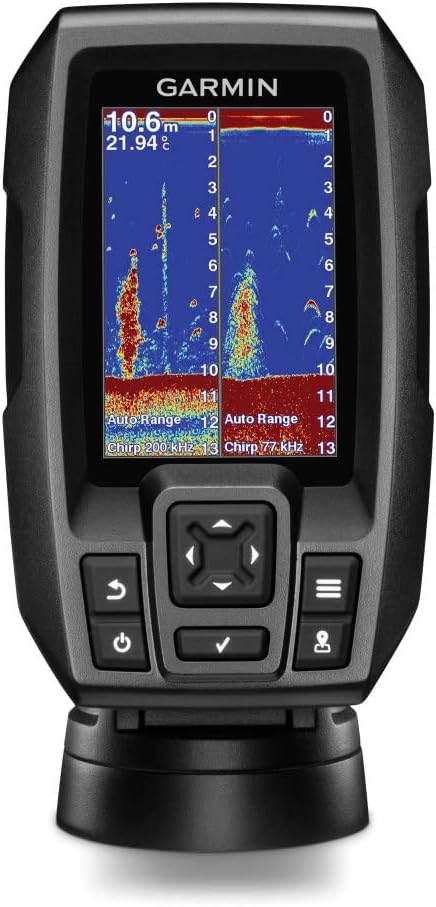
The Garmin 010-01550-00 Striker 4 stands out as a top contender for budget-conscious anglers who need reliable performance. With a 4.6 rating from thousands of users, it proves its worth in diverse fishing environments. This unit combines essential features like CHIRP Sonar and GPS into a compact package that is easy to mount and use.
We may earn a commission when you buy through this link, at no additional cost to you.
One of its strongest assets is the Clear Vu scanning Sonar, which provides near photographic images of objects and structure beneath your boat. The CHIRP Sonar sends a continuous sweep of frequencies, allowing for crisper fish arches and better target separation than traditional sonar. Additionally, the dedicated buttons make navigation intuitive without requiring deep technical knowledge.
While the 3.5 inch display is on the smaller side compared to larger models, it remains readable in bright sunlight due to its high contrast. The IPX7 water rating ensures durability against splashes and rain, making it suitable for various weather conditions. However, the mapping capabilities are basic compared to high-end chartplotters.
This device is ideal for small boat owners or kayakers who want precise sonar data without complex installation. The included transducer supports installation with a transom mount, reducing the need for drilling. If you value simplicity and clarity in sonar returns, this Striker 4 model offers exceptional value for its price point.
The CHIRP technology improves how fish and structure appear on screen by separating targets more effectively.
Keyed interfaces with dedicated buttons ensure that settings can be adjusted quickly while on the water.
We may earn a commission when you buy through this link, at no additional cost to you.
This handheld fish finder represents one of the most accessible entry points into sonar technology for anglers on a tight budget. It is designed for portability, making it perfect for fishing from a kayak, dock, or while ice fishing. The device uses 4 AAA batteries to power the LCD display, ensuring you are not reliant on boat power systems.
We may earn a commission when you buy through this link, at no additional cost to you.
The unit provides accurate depth readings and can detect fish size as small, medium, or big. It uses a 200 kHz sonar frequency with a 45-degree beam angle, which is sufficient for shallow to moderate depths. The transducer can be tossed into the water to quickly check depth and structure without complex mounting procedures.
Although it lacks advanced GPS features, the device offers essential functions like fish alarms and adjustable sensitivity. The display is visible in both sunlight and darkness thanks to the backlight mode. Users note that it operates best at speeds below 5 mph, so it is better suited for stationary or slow-moving fishing scenarios.
For those who prioritize portability and low cost, this tool delivers solid performance. The 2-year warranty adds peace of mind regarding durability. While it may not replace a mounted unit for serious boaters, it is an excellent backup or primary tool for casual anglers who value ease of use and transport.
The compact size and neck strap allow you to carry the unit effortlessly while wading or fishing from shore.
Despite the low cost, it effectively shows water depth and fish locations through standard sonar technology.
We may earn a commission when you buy through this link, at no additional cost to you.
The Garmin STRIKER Vivid 4cv takes budget fish finders to a new level with its color display and advanced sonar capabilities. It holds an impressive 4.7 rating, reflecting its popularity among users who demand high quality visuals. This unit includes the GT20 transducer which supports both CHIRP traditional sonar and CHIRP ClearVü scanning sonar.
We may earn a commission when you buy through this link, at no additional cost to you.
One of its standout features is the Vivid Scanning Sonar color palettes, which make it easier to distinguish fish and structure from the water column. The 4-inch color screen provides a clear view even in challenging lighting conditions. Additionally, it includes high-sensitivity GPS to mark waypoints and view boat speed effectively.
The built-in Quickdraw Contours mapping is a significant advantage for anglers exploring new waters. This feature allows you to create maps of depth contours while you fish, giving you a personalized chart without extra cost. The tilt/swivel mounting bracket ensures you can adjust the viewing angle to reduce glare and improve visibility.
If you are willing to spend a bit more for premium features, this model is a fantastic choice. It balances high-end performance with user-friendly operation. The combination of color visuals, GPS, and mapping tools makes it suitable for a wide range of freshwater and saltwater fishing activities.
The vivid color display helps separate targets and bottom structure more clearly than monochrome screens.
Quickdraw Contours mapping adds value by letting you chart depths dynamically as you navigate your boat.
We may earn a commission when you buy through this link, at no additional cost to you.
The Lowrance Eagle Fish Finder is designed for clarity and ease of use with its 4-inch IPS portrait screen. This display technology ensures the screen remains clear in bright sunlight and is visible through polarized sunglasses from wide viewing angles. It offers a compelling option for anglers who prioritize screen quality over complex navigation features.
We may earn a commission when you buy through this link, at no additional cost to you.
Its Auto-Tuning Sonar automatically provides optimized settings so you can focus on finding fish rather than adjusting technical parameters. The included 200 kHz Bullet Skimmer transducer delivers a broad beam suitable for kayaks and small boats. You can view fish icons with depth and use zoom for a closer look without needing an audible fish alarm.
The device features a twist-lock connector for simple installation and removal, making it ideal for setups where the unit might be moved frequently. The compact portrait design fits well in limited spaces on smaller vessels. Although it lacks integrated GPS mapping, its primary focus on sonar performance is well executed.
This model is a strong choice for recreational fishermen who want a reliable visual aid for finding fish. The combination of an IPS screen and automatic tuning reduces the learning curve for new users. It is a practical tool for enhancing your fishing experience with minimal hassle and clear visual feedback.
The IPS panel offers superior color accuracy and viewing angles compared to traditional LCD screens.
Auto-tuning adjusts sonar settings to ambient conditions so you do not waste time tweaking knobs manually.
We may earn a commission when you buy through this link, at no additional cost to you.
The Humminbird PiranhaMAX 4 delivers reliable sonar performance with its dual beam technology that lets you choose between narrow and wide beams. This flexibility helps identify fish, structure, and contours more accurately depending on the water conditions. It includes a tilt and swivel mount to quickly adjust your viewing area angle for comfort.
We may earn a commission when you buy through this link, at no additional cost to you.
Its design focuses on simplicity with straightforward controls that allow for quick operation while on the water. The included XNT 9 28 T transom-mount transducer provides solid coverage for most recreational boats. The unit is backed by a 1-year limited warranty which adds to its appeal for budget buyers seeking reliability.
Although it does not offer color or GPS, the PiranhaMAX 4 excels at showing basic depth and fish data effectively. The display is easy to read and allows you to see the bottom structure clearly. This makes it a solid workhorse for anglers who need fundamental data without unnecessary complexity or high cost.
This model is well suited for anglers who want a plug-and-play solution for finding fish. The dual beam feature provides a good balance between detail and coverage area. If you prioritize proven sonar performance and ease of setup, this PiranhaMAX unit is a dependable choice for freshwater fishing.
Switching between narrow and wide beams allows you to optimize detection based on target depth and width.
The tilt and swivel mount ensures you can position the display to avoid glare while fishing.
We may earn a commission when you buy through this link, at no additional cost to you.
The LUCKY Kayak Portable Fish Finder is designed specifically for anglers who need a compact solution for kayak or boat fishing. It can be held in one hand and comes with a neck strap for convenience while you are busy on the water. The unit displays approximate fish location and water depth accurately within a range of 3ft to 328ft.
We may earn a commission when you buy through this link, at no additional cost to you.
Its LCD display shows short and tall weeds as well as sand and rocks on the bottom. You can switch measurement units between feet and meters freely to suit your preference. The 5 levels sensitivity adjustment makes fishing possible in both clear water and turbid conditions without manual calibration.
The fish and fish schools alarm alert you to activity in the water immediately. It works continuously for at least 4-5 hours with brand new batteries and offers a battery save mode for extended use. The transducer can be attached to the hull or cast into the water to understand changing depth as you move.
This device is an excellent gift for fishing enthusiasts who value mobility and simplicity. It works effectively in both fresh and saltwater environments. For kayak anglers who do not want a permanently mounted unit, this portable finder offers a practical and affordable way to enhance your catch rate.
The small footprint and neck strap make it easy to manage while paddling and casting simultaneously.
Adjustable sensitivity ensures you can filter out noise in rough water or pick up subtle signals in clear water.
We may earn a commission when you buy through this link, at no additional cost to you.
The Humminbird Helix 5 Chirp GPS G3 Fish Finder brings chartplotting capabilities to a compact unit. It features Dual Spectrum CHIRP Sonar which provides two ways to search for fish and structure through wide and narrow modes. This technology delivers precise target separation that helps you locate fish holding areas more effectively.
We may earn a commission when you buy through this link, at no additional cost to you.
It is equipped with Humminbird Basemap covering over 10,000 lakes and U.S. coastlines for enhanced GPS navigation. The Real-Time Mapping feature using AutoChart Live allows you to create maps of depth contours and bottom hardness while boating. This functionality is powerful for exploring unknown bodies of water without purchasing extra maps.
The reliable keypad control allows operation in any weather conditions, ensuring you do not lose access to features when hands are wet. The softkey controls are user-friendly and allow access to pre-loaded views quickly. While it is more complex than basic units, the depth of functionality supports serious angling pursuits.
For anglers who want both advanced sonar and navigation, this unit is a strong contender. The integration of GPS and mapping with high quality sonar makes it a comprehensive tool. Although it costs more than basic finders, the added capabilities justify the investment for frequent boaters and explorers.
Wide and narrow search modes give you control over how much area you scan versus how much detail you see.
Real-time contour mapping adds significant value by allowing you to build your own charts on the fly.
We may earn a commission when you buy through this link, at no additional cost to you.
This portable fish finder uses a wireless sonar probe that communicates with the handheld unit at a maximum distance of 262 feet. This feature eliminates the need to drill holes in your boat hull for installation. The sensor can be tethered to your fishing line and cast onto water as far as you want for flexible positioning.
We may earn a commission when you buy through this link, at no additional cost to you.
It displays water depth, temperature, fish size, and bottom contour clearly on a color LCD screen. The two selectable background colors help ensure visibility in bright sunlight or during nighttime fishing sessions. The device supports multiple fishing environments including lake, river, sea, and ice fishing effectively.
The rechargeable sensor and display unit provide convenience for extended fishing trips. You should put the sensor in water to check its battery status correctly. Red indicator lights on the sensor will turn off when it is fully charged, allowing you to track power levels easily before heading out.
If you value wireless flexibility and color display, this model is a solid option. The 2-year warranty offers support for any issues after purchase. It is an efficient tool for anglers who want to cast their sonar to specific spots without permanent mounting on their vessel.
The wireless connection allows you to cast the sensor to exact spots without dragging cables behind your boat.
Color backgrounds improve contrast and make data easier to read in varied lighting conditions.
We may earn a commission when you buy through this link, at no additional cost to you.
This portable fish finder features a large 2.4-inch colorful LCD screen that supports 21 operating languages for global use. The rechargeable sonar sensor is designed to support 147 feet of depth detection underwater. It has a 90-degree detective angle to cover a wide area around your kayak or boat efficiently.
We may earn a commission when you buy through this link, at no additional cost to you.
The wireless sonar sensor includes an attractive lamp that turns on automatically when touching water to attract fish. This feature can make fishing easier by drawing fish toward your area. The alarm function shows and emits a warning when fish pass by the coverage place of the sensor along with size and depth details.
It is user-friendly with wide applications for various fishing styles including ice, river, lake, and sea fishing. The sensor is rechargeable which reduces the need for frequent battery changes during outings. The unit is designed to be a necessary companion for fishing enthusiasts looking for modern convenience.
For those who want a bright display and rechargeable components, this model stands out. The depth detection is sufficient for most freshwater and coastal environments. While the lamp is a unique feature, the core function remains solid sonar detection and display for daily fishing needs.
The large colorful screen ensures that fish and structure details are easy to interpret clearly.
An LED on the sensor may help attract fish to your lure area by creating light in deeper water.
We may earn a commission when you buy through this link, at no additional cost to you.
This wireless fish finder comes with a clear LED display and selectable white and black backgrounds for optimal readability. It utilizes both Sonar and Radio frequencies to ensure reliable detection of fish and structure. The receiver and sensor are both rechargeable with a work time of about 6 hours per charge.
We may earn a commission when you buy through this link, at no additional cost to you.
You can mount the sensor on your boat or fishing rod with string or float it to accessible areas. It measures water depth, temperature, fish size, and bottom contour accurately. The display is visible in bright sunlight and at night making it suitable for diverse fishing conditions and times.
Please note that it will not display fish icons if the sensor is in shallow depths less than 1 meter. Always place the sensor into water to check its power status as it will turn on when floating. The brand support team responds within 24 hours every day online for any issues you might encounter.
For anglers who want a wireless option with dual frequency reliability this device is a practical choice. The rechargeable feature reduces long term cost and hassle of buying disposable batteries. It is a solid option for casual fishing trips where portability and ease of use are key priorities.
Using radio signals alongside sonar can improve reliability and range in certain water conditions.
Both parts charge via cable reducing the need for disposable batteries and saving money over time.
We may earn a commission when you buy through this link, at no additional cost to you.
Choosing the right fish finder involves balancing features with your specific fishing needs and budget. This section outlines key factors to help you narrow down options.
Sonar technology defines how clear your readings are. CHIRP Sonar sends continuous frequencies for better target separation and crisper fish arches. Basic 200 kHz sonar works well for general detection but may lack detail compared to advanced systems.
Look for CHIRP or dual beam capabilities if you need precise data. For shallow water, standard sonar often suffices.
Display size impacts how easily you can read information while on the water. Colors displays make it easier to distinguish fish from structure. IPS screens offer better visibility in bright sunlight than standard LCDs.
Choose a screen size that fits your mounting space but allows easy viewing from your fishing position.
Portability is essential for kayakers or anglers who fish from multiple boats. Handheld or wireless units eliminate the need for permanent mounting. Some models run on AAA batteries while others are rechargeable.
Decide between fixed mount and portable based on your vehicle and storage needs. Handhelds are ideal for temporary use.
GPS helps you mark waypoints and navigate to productive spots. Built-in maps save you from buying extra chart cartridges. However, basic GPS units are less detailed than full chartplotters.
If navigation is key, pick a model with integrated mapping. Otherwise, rely on standard sonar to save costs.
Battery life affects how long you can fish without recharging. Rechargeable batteries offer convenience but require charging time. AAA batteries are easy to replace but may run out faster.
Prioritize long battery life or rechargeable options for all-day outings. Check battery specs before buying to match your trip duration.
Water resistance ensures durability against splashes and rain. IPX7 rated units can withstand immersion briefly. This feature is critical for any unit exposed to outdoor elements.
Ensure your chosen fish finder has adequate water resistance for your typical weather conditions. Saltwater use requires robust sealing.
Installation complexity varies from twist-lock mounts to drilling requirements. Wireless models require minimal setup. Transom mounts are easier to install than thru-hull options.
Select a unit that matches your technical comfort level. If you want quick setup, look for models with simple connectors.
A good warranty protects your investment against defects. Brands with responsive support teams can resolve issues quickly. Look for at least a 1-year warranty for reliability.
Check support contact details before purchasing. Good customer service adds value to the initial product cost.
First, ensure the transducer is mounted correctly to avoid interference. For transom mounts, position it parallel to the boat bottom. For handheld units, drop the sensor directly into the water without obstruction.
Second, familiarize yourself with sensitivity settings. Adjust these based on water conditions to filter out noise or find subtle targets. Calibrate depth settings to match your local water levels for accuracy.
Third, clean the unit regularly with fresh water especially if used in saltwater. Store the fish finder in a dry place to prevent corrosion and battery drain. Charge rechargeable models fully before each trip to maintain power levels.
Yes, many budget fish finders are designed for both freshwater and saltwater use. Ensure the unit is rated for saltwater conditions to prevent corrosion. Most models with IPX7 ratings can handle splashes effectively.
Yes, handheld and wireless units are ideal for kayaks because they are portable. Many models include mounting solutions that do not require drilling. Check compatibility with kayak hull materials before mounting.
Most budget units cover depths up to 100 feet or more. For typical recreational fishing, 328 feet is sufficient. Deep sea fishing requires specialized transducers that may be more expensive.
You should see depth readings and structure on the display. If it shows zero depth when the sensor is in water, check the transducer connection. Ensure the device is powered and settings are correct.
CHIRP Sonar offers better target separation and clarity. It is especially useful in weedy or cluttered environments. For basic fishing, standard sonar is acceptable but CHIRP provides more detail.
Most bundled packages include a transom mount transducer. Some portable units come with a castable transducer. Always check the product listing to confirm what is included in the box.
Store batteries properly when not in use. Remove AAA batteries if the device will be unused for weeks. For rechargeable units, avoid draining them completely before recharging to prolong lifespan.
Wireless units offer flexibility and ease of installation. They work well for casting into specific spots. Signal range can vary so ensure the sensor is close enough to the receiver.
This guide has highlighted ten top models ranging from simple handhelds to advanced GPS units. Whether you need a basic depth reader or a color sonar with mapping, there is an option that fits your budget.
Prioritize features that match your fishing style and environment. Portability matters for kayakers while sonar clarity is key for serious anglers. Balance cost with durability to ensure long-term satisfaction.
Remember that prices and availability change frequently. Always check current listings before purchasing to ensure you get the best deal. Investing in the right tool can significantly improve your fishing experience.