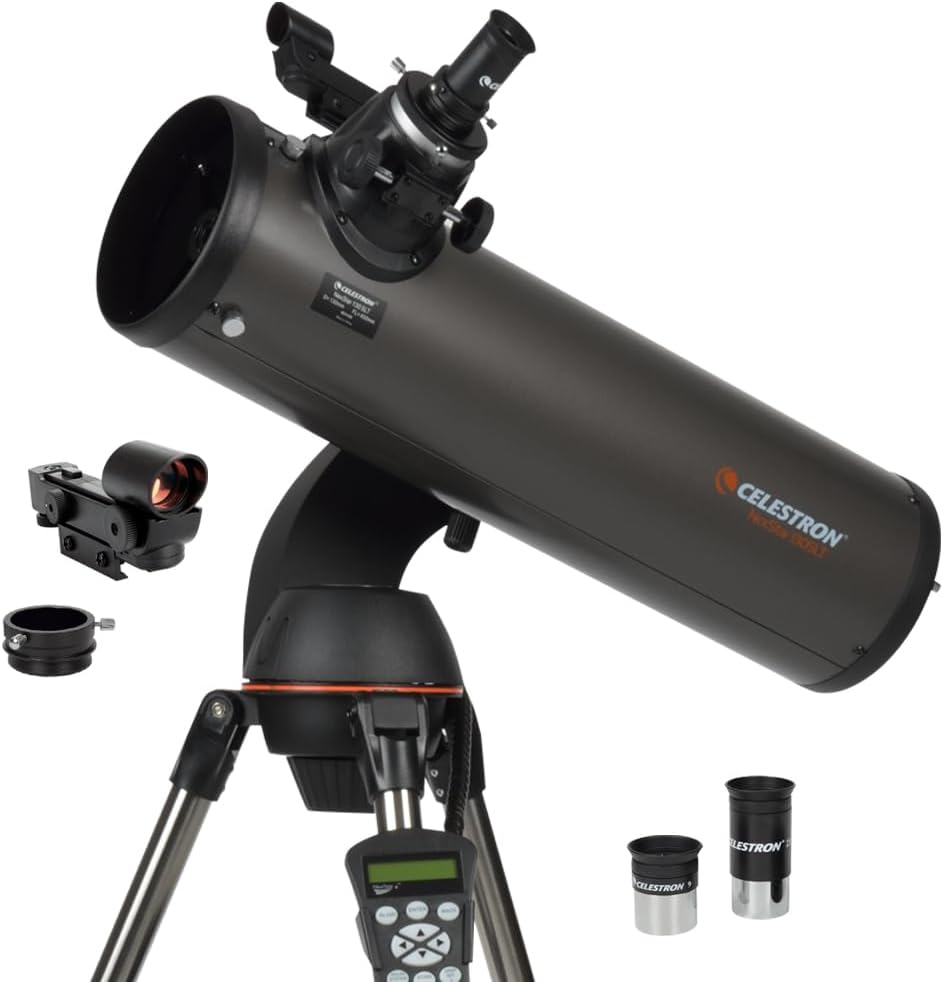
Celestron NexStar 130SLT Newtonian Reflector Telescope – Computerized GoTo
4.4Editor score
Compact and portable design
Free Starry Night software
40000 object database
Choosing the right computerized telescope transforms stargazing from a hobby into a profound exploration of the cosmos. These instruments combine powerful optics with automated tracking systems to locate celestial objects effortlessly. Whether you seek planetary details or deep-sky wonders, modern tech ensures you spend less time aligning and more time observing the universe.
We evaluated ten leading models based on optical performance, mount stability, ease of use, and user ratings. Our analysis covers Schmidt-Cassegrain, reflector, and smart telescopes suitable for various skill levels and budgets. Each product was scrutinized for its ability to deliver clear views and reliable automated tracking under diverse observing conditions.
Every review highlights specific strengths and limitations to help you match a scope to your needs. You will find options ranging from beginner-friendly tabletop designs to advanced equatorial mounts. Please note that availability and specific pricing may fluctuate, so verifying current stock and costs directly with the retailer is advisable before purchasing.
4.4Editor score

4.3Editor score

4.4Editor score
As an Amazon Associate we earn from qualifying purchases.
The following table provides a side-by-side comparison of all ten selected computerized telescopes. We highlight key optical specifications and design features to help you quickly identify which model aligns best with your observational goals and setup requirements.




The Celestron NexStar 8SE stands as a premier choice for adults seeking a balance of performance and ease of use. With a robust 4.3 rating, this telescope combines a classic Schmidt-Cassegrain design with advanced computerized tracking. Its standout quality lies in its ability to seamlessly locate and track celestial objects without manual intervention.
We may earn a commission when you buy through this link, at no additional cost to you.
The 8-inch aperture gathers significant light, revealing fine lunar details and deep-sky objects like galaxies with clarity. The fully automated GoTo mount simplifies the experience by using a database of over 40,000 objects. Users benefit from SkyAlign technology which aligns the mount in minutes by centering just three bright stars.
While the optical performance is exceptional, the scope does have a weight that requires a stable setup surface. Additionally, it relies on a power source for the motorized mount which is a common trade-off for automation. These factors are generally acceptable given the high level of optical precision and tracking stability provided.
This telescope is ideal for adults who want to progress beyond manual scopes without entering professional-grade complexity. Whether observing planetary rings or fuzzy nebulae, the NexStar 8SE delivers consistent results. It is a highly recommended investment for anyone serious about long-term astronomical observation.
The 8-inch aperture ensures bright, detailed views of distant galaxies and planetary surfaces that smaller scopes might miss.
The computerized mount keeps targets centered automatically, allowing for extended viewing sessions without constant adjustment.
We may earn a commission when you buy through this link, at no additional cost to you.
The Celestron NexStar 130SLT offers an excellent entry point into computerized astronomy with its strong 4.4 rating. This Newtonian reflector balances cost and capability by providing a database of over 4,000 celestial objects. It is an ideal choice for families or beginners looking to automate their stargazing experience without a high price tag.
We may earn a commission when you buy through this link, at no additional cost to you.
Its compact design makes it highly portable for trips to dark sky sites. The 130mm aperture gathers enough light to view planetary details like Saturn's rings and cloud bands on Jupiter clearly. The included Starry Night software adds value by helping users simulate and plan their observing sessions effectively.
While it excels in portability, the smaller aperture means faint deep-sky objects may appear less bright compared to larger models. The tripod is functional but basic, which can be a limitation in windy conditions. However, for the price, the optical clarity and automation features offer significant value.
This model is perfect for adults wanting a hassle-free setup that is easy to transport. It provides a reliable way to learn the sky without complex alignment procedures. If you prioritize portability and ease of use over maximum light gathering, this telescope is a smart purchase.
The simple setup process and user friendly interface make it accessible for those new to telescope use.
Its lightweight frame allows for easy transport to various observing locations without heavy lifting.
We may earn a commission when you buy through this link, at no additional cost to you.
The Odyssey PRO by UNISTELLAR represents the cutting edge of smart astronomy with its high 4.4 rating. This digital and computerized telescope combines optical viewing with advanced imaging capabilities in a single integrated system. It stands out for its ability to start observing in under two minutes with automatic alignment and no polar alignment needed.
We may earn a commission when you buy through this link, at no additional cost to you.
Its unique eyepiece technology provides an immersive visual experience while capturing digital images. Users can observe directly through the eyepiece or via a phone or tablet for enhanced visibility. The system includes onboard storage and a battery that lasts up to five hours, making it a self-contained solution.
While the price is premium, the convenience and feature set justify the cost for serious observers. The reliance on app connectivity is a necessary trade-off for such sophisticated automation. Some users might prefer a purely optical path, but the digital enhancement adds a new dimension to observation.
This telescope is best for tech-savvy adults who want to capture and share their views effortlessly. It is perfect for citizen science campaigns like asteroid occultations or exoplanet transits. If you value speed, ease of use, and data export capabilities, this is the ultimate tool.
The ability to capture and export RAW data allows for advanced processing and contribution to scientific projects.
Automatic alignment means you can spend nearly all your time looking at the sky instead of aligning.
We may earn a commission when you buy through this link, at no additional cost to you.
The Celestron NexStar 5SE is a highly rated 4.4 choice for those who want portability without sacrificing computerized features. It features a classic 5-inch Schmidt-Cassegrain optical tube that fits easily on a tripod. The inclusion of a built-in wedge makes it a versatile option for entry-level astrophotography.
We may earn a commission when you buy through this link, at no additional cost to you.
Optically, it provides sharp views of the Moon and planets with enough light gathering for major deep-sky objects. The NexStar+ hand control offers a massive database of over 40,000 objects for easy exploration. SkyAlign technology ensures you get up and running in minutes without needing to know star names.
While the compact design is a major plus, the smaller aperture limits the faintest deep-sky visibility. The built-in wedge can add a bit of bulk when packing up. However, for its size, it offers an impressive range of capabilities that suit various observing styles.
This model is ideal for adults who travel frequently or have limited storage space. It serves as a great middle-ground between smaller scopes and larger observatory units. If you want a reliable GoTo system that can double for imaging, the 5SE is a strong contender.
The built-in wedge allows for polar alignment which is essential for tracking during long exposure imaging.
Despite its smaller size, the optics deliver detailed views that rival larger scopes in brightness.
We may earn a commission when you buy through this link, at no additional cost to you.
The Celestron 114LCM is a beginner-friendly option rated at 4.2 that simplifies the learning curve. It is a fully computerized Newtonian reflector designed to automate the finding process. The Sky Tour button is a standout feature that suggests objects available in the current sky so users do not have to plan manually.
We may earn a commission when you buy through this link, at no additional cost to you.
This model comes with everything needed to start stargazing, including eyepieces and a finderscope. The 114mm aperture provides clear views of major planets and the Moon. Its all-glass optics ensure decent contrast and brightness for a scope in this price range.
One minor drawback is the size of the full-height tripod which can be cumbersome to transport. Also, like all reflectors, it may require occasional collimation to maintain optical alignment. These are standard trade-offs for a budget-friendly computerized setup.
This telescope is excellent for adults who want a plug-and-play experience without extra accessories. The included software and accessories make it a comprehensive package. If you want a reliable entry point into automated astronomy with all the basics covered, this is a solid choice.
The Sky Tour button generates a curated list of targets so you can start observing immediately.
With tripod eyepieces and software included there is no need to buy extra items.
We may earn a commission when you buy through this link, at no additional cost to you.
The Celestron NexStar 127SLT is a 4.2 rated Maksutov-Cassegrain telescope that offers high contrast views. It is an excellent choice for planetary observation and viewing the Moon in detail. The computerized mount makes locating objects simple with a database of over 40,000 targets.
We may earn a commission when you buy through this link, at no additional cost to you.
Its design is compact and lightweight which allows for easy transport to any observing site. The included Starry Night software helps users plan sessions and learn about the sky. SkyAlign technology ensures that you can get the telescope aligned in minutes using any three bright objects.
While the optical quality is sharp, the small aperture means deep-sky objects like faint nebulae are harder to see. The long focal length also limits the field of view for wide-sky scanning. These are acceptable limitations for a scope optimized for planetary performance.
This model is best for adults who prioritize sharp planetary views and portability. It is perfect for backyard sessions where you need a quick setup. If you want a lightweight computerized scope that delivers crisp details, the 127SLT is a great option.
The Maksutov design provides high contrast which is ideal for viewing details on planets like Mars and Jupiter.
Its compact size fits easily in a car trunk for impromptu viewing trips.
We may earn a commission when you buy through this link, at no additional cost to you.
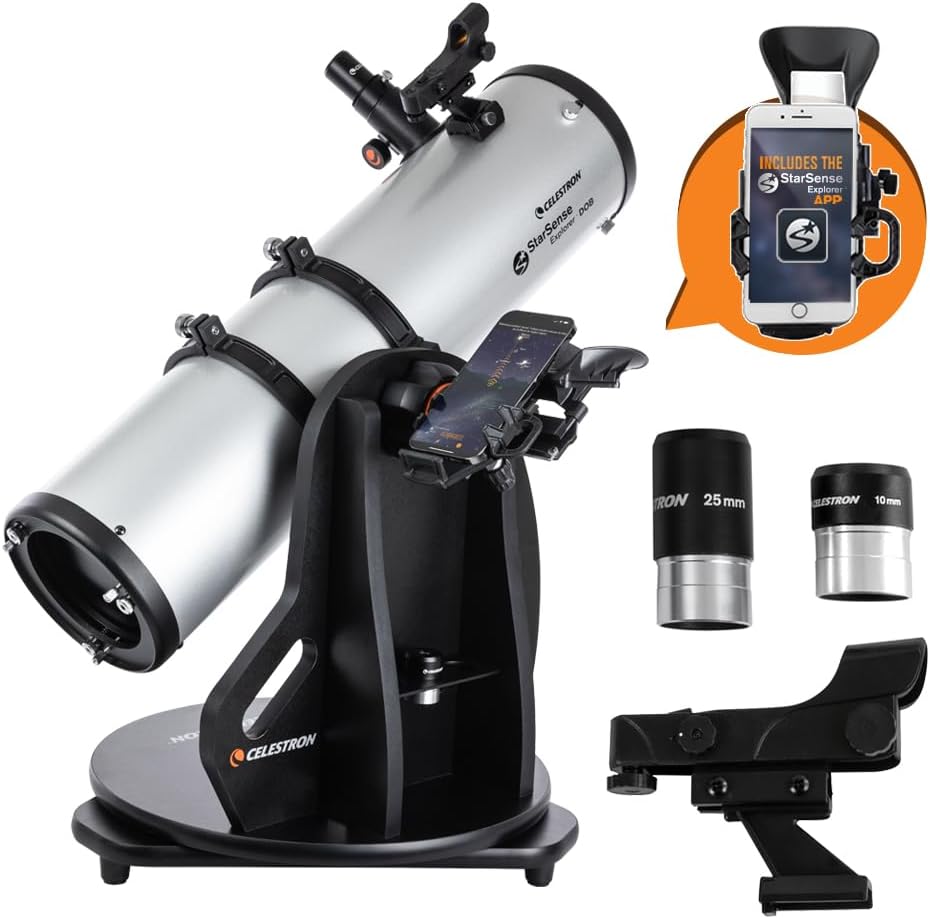
The Celestron StarSense Explorer 150mm is a unique 4.3 rated telescope that uses a smartphone for navigation. This app-enabled system removes the need for traditional star charts or complex manual alignment. The StarSense technology analyzes the sky to pinpoint your position and guide you to targets.
We may earn a commission when you buy through this link, at no additional cost to you.
It features a 6-inch Newtonian reflector that delivers bright and detailed views of planets and nebulae. The tabletop Dobsonian base provides a stable and simple setup process. You simply follow on-screen arrows until a bullseye turns green to locate your target.
The reliance on a smartphone means you need a compatible device and a stable connection. The tabletop height may require sitting or crouching for comfortable viewing over long periods. However, the simplicity of use makes these trade-offs worth it for many observers.
This telescope is ideal for adults who want a modern approach to stargazing. It simplifies the learning process by using technology you already have. If you want a large aperture at a reasonable price with no alignment hassle, this is a top choice.
The app uses sky recognition to find objects automatically saving you from learning constellation maps.
The high-reflectivity coatings ensure sharp images even at higher magnifications.
We may earn a commission when you buy through this link, at no additional cost to you.
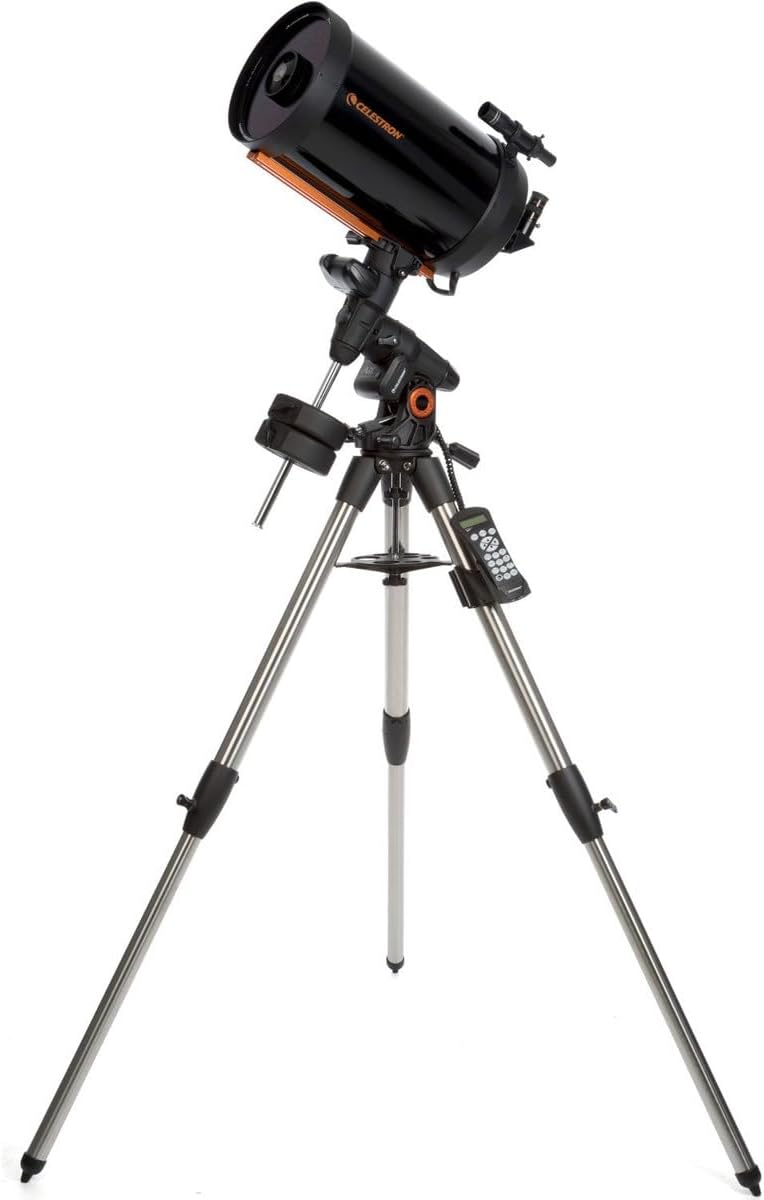
The Celestron Advanced VX 8-inch is a robust choice for advanced observers with a 4.2 rating. It features an equatorial mount that allows for precise tracking essential for long exposure astrophotography. The optical tube provides exceptional quality with StarBright XLT coatings for high contrast.
We may earn a commission when you buy through this link, at no additional cost to you.
It includes a NexStar+ hand control with a massive object database and powerful magnification options. The stainless steel tripod ensures stability which minimizes vibrations during viewing. This setup is designed for those who want to push their observing to the next level.
While the optical performance is superb, the weight and complexity of the mount make it less portable. Polar alignment is required which takes more time than alt-azimuth systems. However, for serious imaging or deep-sky visual work the stability is unmatched in this class.
This telescope is best for adults who want to focus on astrophotography and detailed visual observation. It is a step up from entry-level GoTo scopes in terms of build quality and performance. If you need a sturdy mount for serious exploration this is a strong option.
The EQ mount allows for long exposure tracking which is critical for capturing faint deep-sky objects.
StarBright XLT coatings enhance light transmission so your images are bright and clear.
We may earn a commission when you buy through this link, at no additional cost to you.
The Celestron Advanced VX 9.25-inch is a powerful scope rated at 4.4 for serious stargazing. Its large aperture gathers ample light to reveal stunning details in deep-sky objects. The Advanced VX mount ensures stable and accurate tracking which minimizes vibrations for steady views.
We may earn a commission when you buy through this link, at no additional cost to you.
It features a database of over 40,000 objects for easy navigation with the NexStar+ hand control. The design allows for high magnification which brings planets and galaxies closer than ever. The steel tripod provides a solid platform that supports the weight of the optical tube.
While the performance is outstanding, the weight and size make it less ideal for frequent transport. It requires a stable base and careful setup which can take some time. These factors are acceptable for those who prioritize optical performance over portability.
This telescope is ideal for adults dedicated to deep-sky observation and astrophotography. It offers exceptional clarity and brightness that smaller scopes cannot match. If you want the best views of distant galaxies and nebulae, this model delivers superior results.
The 9.25 inch aperture provides the light gathering power needed to see faint galaxies clearly.
The computerized mount keeps objects centered for long periods which aids both visual and imaging work.
We may earn a commission when you buy through this link, at no additional cost to you.
The Celestron Advanced VX 6-inch is a highly rated 4.4 option that balances size and equatorial performance. It offers a compact design compared to larger EQ mounts while maintaining a large 1500mm focal length. This makes it excellent for high-resolution planetary viewing.
We may earn a commission when you buy through this link, at no additional cost to you.
The optical tube uses StarBright XLT coatings for enhanced contrast and light transmission. The Advanced VX mount provides precise tracking which is essential for long-term observation. It is a reliable choice for those who want equatorial capabilities without the bulk of larger scopes.
While it is a great visual instrument the smaller aperture limits deep-sky performance compared to larger models. The EQ mount adds weight and complexity compared to simple alt-azimuth systems. However, for visual planetary work and compact imaging setups it performs very well.
This telescope is best for adults who want an EQ mount in a lighter package. It is ideal for those who value optical sharpness and tracking precision. If you want a manageable scope for detailed planet views this is an excellent choice.
The mount is smaller than larger EQs making it more manageable for observers with limited space.
The StarBright XLT coatings ensure that light passes through efficiently for brighter images.
We may earn a commission when you buy through this link, at no additional cost to you.
Selecting the right computerized telescope involves balancing optical performance with ease of use. This section outlines the most important factors to consider before making your investment.
Aperture refers to the diameter of the primary lens or mirror. Larger apertures gather more light allowing you to see fainter objects like distant galaxies and nebulae. For deep-sky observation aim for at least 6 inches while planetary viewing can be done with smaller apertures.
Choose an aperture that matches your primary interests. If you plan to focus on planets a smaller scope is sufficient but for deep-sky objects prioritize a larger opening for better visibility.
Computerized mounts come in two main types alt-azimuth and equatorial. Alt-azimuth mounts move up down and left right making them easier to use for visual observing. Equatorial mounts track the sky along a single axis which is necessary for long-exposure imaging.
Decide based on your usage. If you only want to look through the telescope an alt-azimuth mount is simpler and more portable. If you want to take photos of deep-sky objects an equatorial mount is essential.
The database size indicates how many celestial objects the telescope can locate. Most scopes include a database of at least 40000 objects which covers the major stars planets and deep-sky targets. A larger database gives you more variety and flexibility.
Look for models with extensive databases to ensure you can find any target you are interested in. A rich database makes the experience more interactive and educational.
Setup time is a key factor for hobbyists. Modern telescopes feature technologies like SkyAlign that allow you to align the scope quickly using any three bright stars. This reduces the time spent preparing and increases time spent observing.
Prioritize models with quick alignment features if you want to observe frequently. A complex setup process can discourage usage so look for automation that streamlines the process.
Portability determines how easily you can transport your telescope to dark-sky sites. Consider the weight of the optical tube and the tripod. Compact designs are better for travel but may sacrifice some stability or aperture size.
Assess how often you plan to travel with your telescope. If you have limited storage space or plan to camp choose a lightweight and collapsible model that is easy to pack.
Many modern telescopes integrate with smartphones or offer proprietary software. Apps can enhance your experience by providing guides and simulations or controlling the telescope remotely. Some models also include software like Starry Night for planning sessions.
Check what software is included or compatible. A well-integrated app can make learning the sky easier and help you plan your observations more effectively.
Build quality affects the longevity and stability of the telescope. Look for sturdy tripods and robust optical tubes that minimize vibrations. High-quality coatings on the optics ensure better contrast and light transmission.
Invest in a model with solid construction to ensure it lasts. A stable mount and good optical coatings are worth the extra investment for a better observing experience.
Reliable customer support is important if you encounter issues or have questions. Reputable brands offer warranties and technical support to help you get the most out of your telescope. Check the terms of the warranty before purchasing.
Choose a brand with a strong reputation for support. Good support means you can get help quickly if needed which protects your investment.
To use your computerized telescope effectively start by assembling the mount and tripod on a stable surface. Ensure the tripod is level and secure to prevent vibrations during viewing. Insert the optical tube and attach the eyepieces and finderscope according to the manufacturer's instructions.
Power on the system and allow the motors to initialize. Use the hand control or app to input your location and time. Follow the alignment process by centering bright stars in the eyepiece until the system confirms alignment. This allows the computer to accurately track objects.
To maintain your telescope keep it covered when not in use to protect against dust and moisture. Regularly check the optical surfaces for dirt and clean them gently with appropriate tools. Store the tripod and accessories in a dry place to prevent rust and corrosion.
A computerized telescope uses a motorized mount and a database to automatically locate and track celestial objects. A manual telescope requires you to find and track objects by hand using star charts. Computerized scopes are easier for beginners and save time.
No you do not need a very large aperture to see planets. A moderate aperture of 4 to 6 inches is sufficient to view details like Saturn's rings and Jupiter's bands. Larger apertures help with faint deep-sky objects.
Some computerized telescopes allow smartphone integration via apps for control or navigation. Models like the StarSense Explorer use your phone to find objects. Check if the specific model supports your device.
Your tripod should support the weight of the optical tube and any accessories comfortably. Ideally choose a tripod rated for 1.5 times the weight of your scope to ensure stability. This prevents unwanted vibrations during viewing.
SkyAlign is a technology that allows you to align your telescope using any three bright stars without knowing their names. The system calculates your position based on these stars. This simplifies the setup process significantly.
A warranty is important as it protects against manufacturing defects and mechanical failures. Most reputable brands offer at least a one or two-year warranty. This ensures you can get support if the scope malfunctions.
Choosing the right computerized telescope allows you to experience the night sky with ease and clarity. The top picks offer a variety of features from compact designs to advanced imaging capabilities. Each model provides a unique balance of optical quality and automation.
Consider your primary observation goals when making your decision. If you want to focus on deep-sky objects prioritize aperture and mount stability. For planetary viewing a smaller scope with high contrast optics may suffice.
Remember to check current availability and verify the latest features before purchasing. Technology evolves quickly and manufacturers often update their models with new software or hardware. Staying informed ensures you get the best value for your investment.