
Canon EF 100-400mm f/4.5-5.6L IS USM Lens
4.0Editor score
L-series professional build
Optical image stabilization
Fluorite and UD elements
This guide compares ten top camera lenses for long distance wildlife photography, evaluating reach, stabilization, and optics to help you choose the perfect
Capturing wildlife from a safe distance requires specialized optics that can bring faraway subjects into sharp focus. A high-quality telephoto lens allows photographers to observe animals without disturbance while maintaining image clarity and detail in challenging lighting conditions.
We have analyzed ten distinct camera lenses designed for long range shooting across various mount systems and price points. Our evaluation considers optical performance, stabilization capabilities, autofocus speed, and overall build quality to determine which options deliver the best results for nature enthusiasts.
Each product selection highlights unique strengths suited for different shooting styles and budgets. While we provide detailed specifications and performance insights, please note that pricing and availability can fluctuate frequently based on market demand and seasonal promotions.
4.0Editor score
4.7Editor score
4.0Editor score
The following table presents a side-by-side comparison of all ten selected lenses, highlighting their key specifications and optical characteristics to assist in your decision-making process.



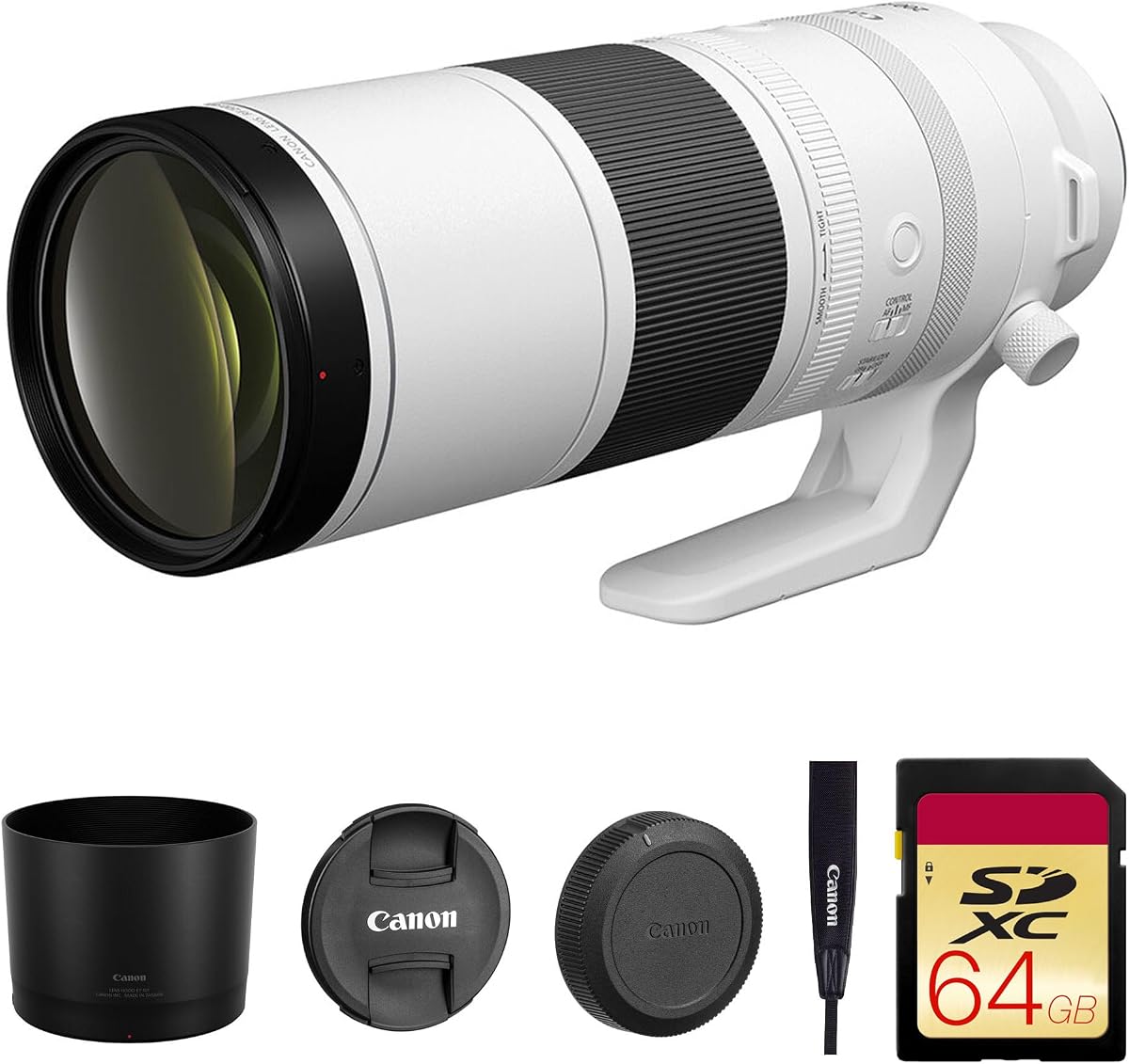
The Canon RF 200-800mm stands out as a premier choice for wildlife photographers seeking extensive reach without excessive bulk. It holds a strong rating for its ability to capture distant subjects with remarkable clarity and precision across its entire zoom range.
We may earn a commission when you buy through this link, at no additional cost to you.
Its built-in image stabilization ensures handheld shots remain sharp even at maximum focal length. The USM autofocus system tracks moving animals swiftly and quietly, making it suitable for sensitive environments where noise could disturb the subject.
While the aperture narrows at 800mm, the optical design compensates with excellent light transmission and minimal aberration. The lens remains compact relative to its reach, allowing for easier transport during long hikes or travel expeditions.
Photographers investing in the Canon EOS R system will find this lens an ideal companion for nature work. It delivers professional results without requiring heavy support gear in many scenarios.
The range from 200mm to 800mm allows versatile framing for both wide environmental shots and tight animal portraits.
Integrated stabilization supports stable shots without a tripod, crucial for spontaneous wildlife encounters in the field.
We may earn a commission when you buy through this link, at no additional cost to you.
This lens offers the world’s first autofocus super-telephoto zoom capability ending at 800mm. It is designed specifically for mirrorless systems, leveraging the RF mount to achieve high optical performance in a relatively small package.
We may earn a commission when you buy through this link, at no additional cost to you.
The optical design maintains sharpness throughout the zoom range, ensuring consistent quality from 200mm to 800mm. It supports extenders for even greater reach, expanding its utility for extreme distance photography.
Despite its power, the lens remains lightweight and comfortable for handheld shooting. This mobility is essential for wildlife photographers who need to reposition quickly or walk long distances to find subjects.
Those seeking the latest RF technology and maximum reach without manual-only options should consider this model. It balances advanced features with practical ergonomics for outdoor use.
Works with RF extenders at all focal lengths to further increase magnification when needed.
The RF mount allows for better light transmission and compact optics compared to older systems.
We may earn a commission when you buy through this link, at no additional cost to you.
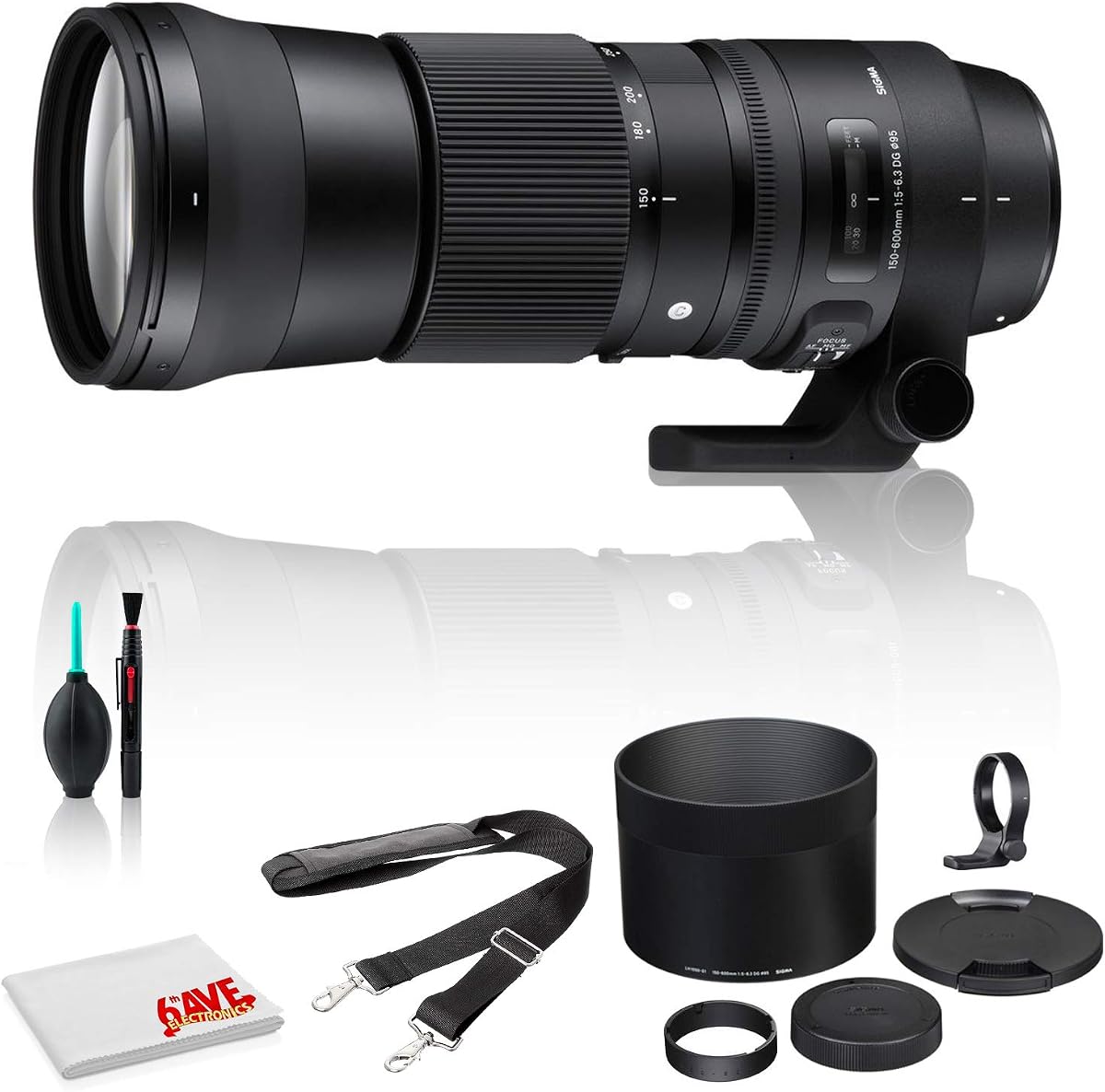
Sigma’s Contemporary lens provides a robust option for Canon DSLR users needing substantial telephoto reach. It includes specialized optical elements to ensure sharpness and reduce color fringing during challenging lighting.
We may earn a commission when you buy through this link, at no additional cost to you.
The Optical Stabilizer helps maintain image clarity when shooting handheld at long distances. The Hyper Sonic Motor delivers responsive autofocus performance, though it may not be as silent as some top-tier rivals.
This lens is bundled with a deluxe cleaning kit, adding value for field work where lens maintenance is critical. Its construction is built to withstand outdoor use while delivering consistent results.
For EF mount users who want a balance of price and performance, this lens is a strong contender. It covers a wide focal range suitable for varied wildlife scenarios.
One FLD and three SLD elements minimize aberrations for clearer detailed images.
The bundle includes a cleaning kit to help maintain lens quality during outdoor trips.
We may earn a commission when you buy through this link, at no additional cost to you.
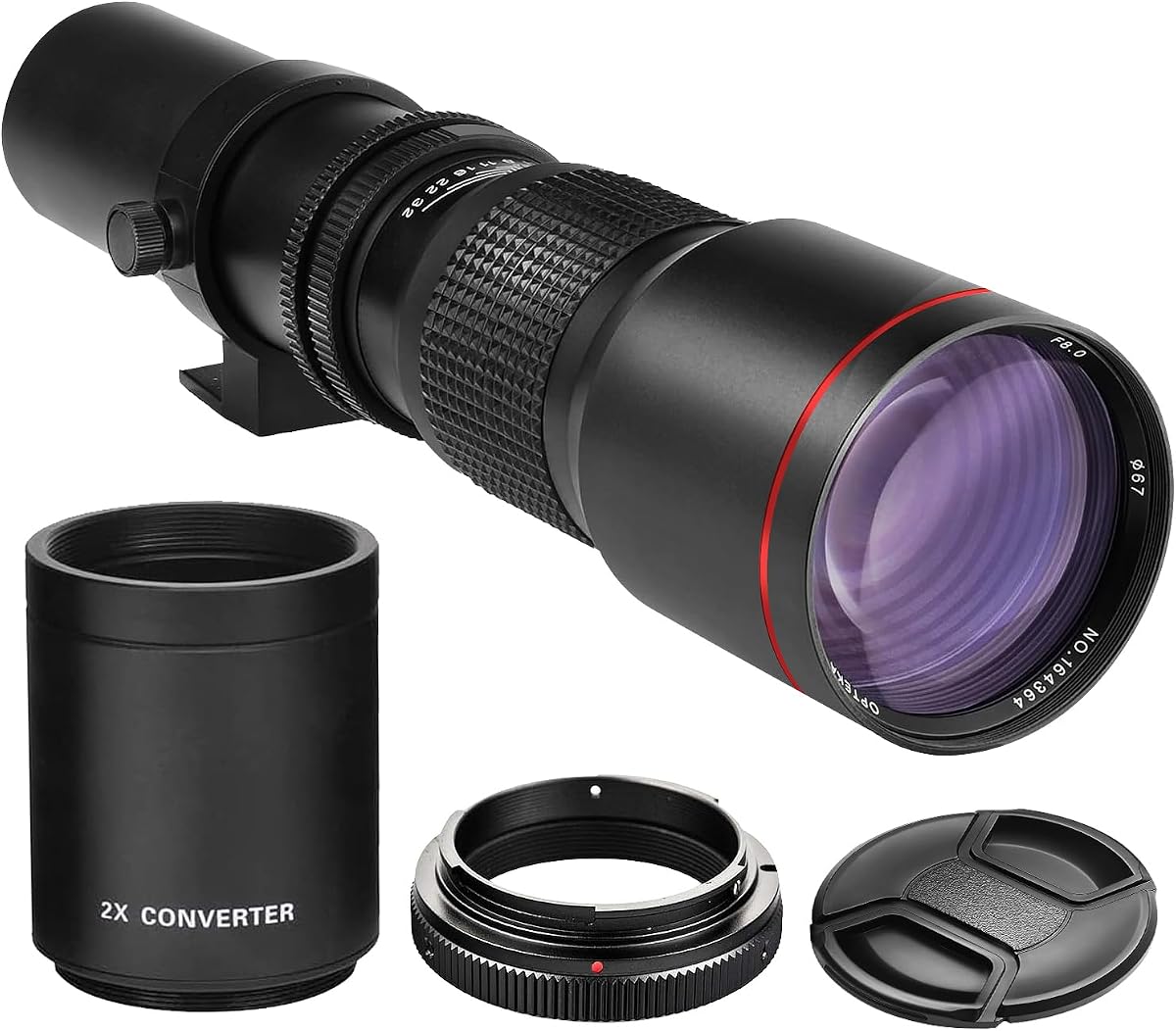
This lens offers an affordable entry point into extreme telephoto photography for Canon DSLR owners. It features high index, low dispersion glass to ensure clear and sharp photos despite its budget-friendly nature.
We may earn a commission when you buy through this link, at no additional cost to you.
Manual focus provides full creative control, allowing precise adjustments for static or slow-moving wildlife subjects. The 2X teleconverter option doubles the reach to 1000mm, offering extraordinary magnification for distant animals.
The construction is robust, with a black finish designed to withstand the rigors of outdoor shooting. While it lacks autofocus and stabilization, its simplicity suits photographers who prefer manual techniques.
For those on a tight budget or looking to experiment with long-range shots without a major investment, this lens delivers surprising capability. It is ideal for patient photographers who can manage manual focusing.
The 2X teleconverter allows for 1000mm reach to bring distant subjects closer effectively.
Complete creative control over focus and aperture enables unique artistic expression.
We may earn a commission when you buy through this link, at no additional cost to you.
As a professional L-series lens, this model delivers outstanding optical performance and reliability for serious wildlife photographers. It includes one fluorite element and multiple UD elements to minimize aberrations and ensure sharpness.
We may earn a commission when you buy through this link, at no additional cost to you.
The optical image stabilization reduces shake significantly, improving handheld capability. The ring-type USM motor ensures fast and quiet autofocus, which is critical for tracking active animals in the field.
The lens is compatible with teleconverters for extended reach and features a removable tripod collar for balanced support. The included filter kit adds value for protecting the front element during outdoor shoots.
This is an investment-grade option for Canon DSLR users who demand the highest quality results. It handles challenging conditions well and provides consistent professional output.
Fluorite and UD elements reduce chromatic aberrations for high fidelity color and sharpness.
Reduces camera shake by up to two stops for sharper handheld images at long focal lengths.
We may earn a commission when you buy through this link, at no additional cost to you.
This lens provides an incredibly wide zoom range up to 1600mm, making it one of the longest options available. It is designed for Canon DSLR users who need extreme magnification without a professional budget.
We may earn a commission when you buy through this link, at no additional cost to you.
The HD manual telephoto design ensures crisp and detailed photos when focused correctly. Its 2X teleconverter capability enables the 1600mm maximum reach for distant subjects like birds or celestial objects.
Constructed for EF-Mount compatibility, it attaches securely to a variety of Canon camera bodies. The lens offers enhanced photographic flexibility for sports or wildlife like never before with such zoom range.
For those needing extreme reach at a low cost, this lens is a unique solution. It requires patience and a tripod due to manual controls but rewards with unmatched magnification.
The zoom range allows photographers to capture subjects from far away without getting closer.
Designed specifically for long-range shots where standard lenses fall short in reach.
We may earn a commission when you buy through this link, at no additional cost to you.
A compact option for EOS R mirrorless users, this lens balances portability with telephoto performance. It features optical image stabilization that provides up to 5.5 stops of correction for stable shooting.
We may earn a commission when you buy through this link, at no additional cost to you.
The Nano USM motor ensures smooth and quiet autofocus, ideal for video or stills of wary wildlife. With a maximum magnification of 0.41x at 400mm, it offers some close-up utility as well.
Its design is optimized for travel, weighing significantly less than traditional super-telephoto lenses. The 100-400mm range covers many common wildlife scenarios without excessive bulk or cost.
Photographers prioritizing weight and ease of use will find this lens an excellent companion. It brings modern RF performance to those seeking practical wildlife photography.
Up to 5.5 stops of shake correction allows handheld shooting in lower light conditions.
High speed and quiet focus ensures subjects are captured precisely without disturbance.
We may earn a commission when you buy through this link, at no additional cost to you.
This lens offers an accessible entry into telephoto photography for casual wildlife shooters. It features a smooth zooming mechanism and lightweight construction for easy handling during extended use.
We may earn a commission when you buy through this link, at no additional cost to you.
While it lacks image stabilization, the design ensures consistent optical performance across its range. It is compatible with many Canon DSLR cameras, making it versatile for users with older bodies.
The close focusing distance allows for reasonable flexibility in framing subjects. Weighing only 16.8 ounces, it does not add significant burden to a camera setup.
For beginners or as a secondary lens for quick outings, this model provides reliable performance. It is a practical choice for those testing the telephoto waters.
Weighs only 16.8 ounces, making it easy to carry during long outdoor sessions.
Improved ring design ensures smoother transitions between focal lengths while shooting.
We may earn a commission when you buy through this link, at no additional cost to you.
Designed for Nikon DSLR users, this lens offers substantial reach at a competitive price point. It features three extra-low dispersion elements to ensure superior clarity and color precision in shots.
We may earn a commission when you buy through this link, at no additional cost to you.
The Vibration Reduction system minimizes camera shake, providing up to 4.5 stops of stabilization. The Silent Wave Motor ensures rapid and accurate autofocus with full-time manual override capability.
This bundle includes a filter kit and cleaning supplies, adding practical value for outdoor photographers. The rotating tripod collar supports stable support for vertical or horizontal orientations.
For Nikon shooters seeking a versatile super-telephoto zoom, this lens is a top choice. It combines performance with affordability and useful included accessories.
Ensures rapid, silent, and accurate autofocus suitable for sensitive wildlife environments.
Minimizes camera shake impact for sharper images even when shooting handheld.
We may earn a commission when you buy through this link, at no additional cost to you.
This renewed lens offers the same optical performance as a new model at a reduced cost. It is a tested and cleaned version of the original EF 75-300mm, ensuring reliable results for users.
We may earn a commission when you buy through this link, at no additional cost to you.
The lens maintains the standard 75-300mm focal range and aperture specifications. It supports a 58mm filter thread and provides a 4.9-foot minimum focus distance for flexibility in framing.
Choosing a renewed option can be environmentally friendly and budget-conscious without sacrificing image quality. It remains compatible with various Canon DSLR cameras for broad utility.
For buyers seeking a practical telephoto solution at a lower price, this renewed model is a smart option. It delivers consistent performance for casual and semi-pro wildlife photography.
Renewed units provide high performance at a fraction of the cost of new retail models.
Features the same aperture and focal range as the new version for consistent output.
We may earn a commission when you buy through this link, at no additional cost to you.
Selecting the right telephoto lens involves evaluating several technical factors that impact image quality and usability in the field.
The focal length determines how close distant subjects appear in your frame. For wildlife, longer focal lengths like 400mm to 800mm allow you to capture animals from a safe distance without disturbing their natural behavior. Consider whether you need extreme reach or if a moderate zoom range suffices for your typical shooting scenarios.
Prioritize lenses that offer at least 400mm equivalent reach for true distance wildlife photography.
At long focal lengths, camera shake is amplified, leading to blurry images. Image stabilization systems counteract this by compensating for hand movements, allowing for sharper handheld shots. Look for IS, VR, or OS technology depending on the brand to ensure stability in various conditions.
Ensure your lens has stabilization to maintain clarity when not using a tripod.
Wildlife is often fast-moving and unpredictable, requiring quick and accurate focusing. High-performance lenses use ultrasonic motors like USM or STM to lock focus rapidly and quietly. This capability is critical for tracking animals in motion without missing the decisive moment.
Choose lenses with fast autofocus motors to track moving subjects effectively.
Optical construction impacts sharpness, contrast, and color fidelity. Elements like fluorite, UD, or low dispersion glass reduce chromatic aberrations and ensure clear images. High glass quality also minimizes distortion, which is vital for detailed wildlife portraits.
Look for lenses with specialized glass elements for superior image quality.
Your lens must physically fit your camera body. Modern mirrorless systems use RF or Z mounts, while older DSLRs use EF or F mounts. Ensure the lens is compatible with your specific system to avoid needing adapters that may impact performance or weight.
Verify that the lens mount matches your camera’s mount type.
Wildlife photography often takes place in harsh environments with dust, moisture, and rough terrain. A durable build with weather sealing protects the lens during outdoor adventures. Robust construction ensures longevity and reliable performance over years of field use.
Select lenses with durable builds to withstand outdoor elements.
Telephoto lenses vary significantly in price based on performance and build. While premium options offer top performance, budget alternatives can still yield great results for hobbyists. Determine your investment capacity and balance cost against required features.
Find a balance between cost and features that meets your photography needs.
Some lenses come bundled with filters, cleaning kits, or tripods that add value. These accessories can save money and enhance functionality immediately. Consider what extras are included when comparing options to maximize overall value.
Check for included accessories that enhance convenience and protection.
When shooting wildlife, use a tripod or monopod to support the weight of long lenses and ensure stability. This is particularly important for manual focus or heavy telephoto lenses to prevent camera shake and blurring during exposure.
Maintain your lens by cleaning the front and rear elements gently with a microfiber cloth after every shoot. Avoid touching glass surfaces directly to prevent smudges and use a blower brush to remove dust before wiping to avoid scratches.
Store your lens in a dry, temperature-controlled environment to protect seals and internal mechanics. Using a lens cap when not in use prevents dust accumulation and damage to the optical surfaces during transport or storage.
A focal length of at least 400mm is generally recommended for wildlife to allow safe distancing and detailed framing. Lenses extending to 800mm provide even greater reach for distant animals.
Yes, image stabilization is highly recommended as it compensates for hand shake at long focal lengths, ensuring sharper handheld images even in lower light or during movement.
In some cases, adapters allow DSLR lenses to work on mirrorless bodies, but native RF or Z lenses offer better performance, autofocus, and compact designs for new systems.
Use a blower brush to remove dust first, then wipe gently with a microfiber cloth and lens cleaning solution. Avoid harsh chemicals or rough fabrics that can damage coatings or glass.
Manual lenses can work well for static subjects but are challenging for moving wildlife. Autofocus is typically preferred to track fast animals accurately and efficiently.
Essential accessories include a sturdy tripod, lens hood for glare protection, and a cleaning kit. A camera bag with extra space helps carry the gear safely during travel.
The top picks in this guide offer a range of options tailored to different budgets and camera systems. From the Canon RF 200-800mm bundle to the budget-friendly manual lenses, each has strengths suited to varied wildlife needs.
Prioritize optical quality, stabilization, and autofocus speed when selecting your lens. These factors directly impact your ability to capture sharp, detailed images of distant subjects in natural settings.
Always check current pricing and availability before purchasing, as deals and stock levels fluctuate. Ensure your chosen lens matches your camera mount to avoid compatibility issues during your outdoor adventures.