
AGFRC 20A BLHeli_S DSHOT600 ESC for FPV Drone (XR-20A)
4.3Editor score
DShot600 protocol support
Lightweight compact design
Smooth throttle response
This guide compares the top ten Escs for Racing Quadcopter builds, analyzing performance, firmware, and reliability for competitive FPV flying in October 2026.
Choosing the right electronic speed controllers is critical for high performance quadcopter builds. Reliable Escs ensure smooth throttle response and efficient power delivery during intense racing maneuvers.
We evaluated ten leading models based on firmware support, current handling, and build quality. Each entry offers unique advantages for different flying styles and budget constraints in the FPV community.
Every pick highlights key specifications and real-world performance traits to help you decide. Remember that availability and pricing can fluctuate, so verify details before finalizing your purchase decision.
4.3Editor score
4.4Editor score

4.3Editor score
This side-by-side comparison details the technical specifications and key features of each selected electronic speed controller to help you find the perfect match for your racing quadcopter build.




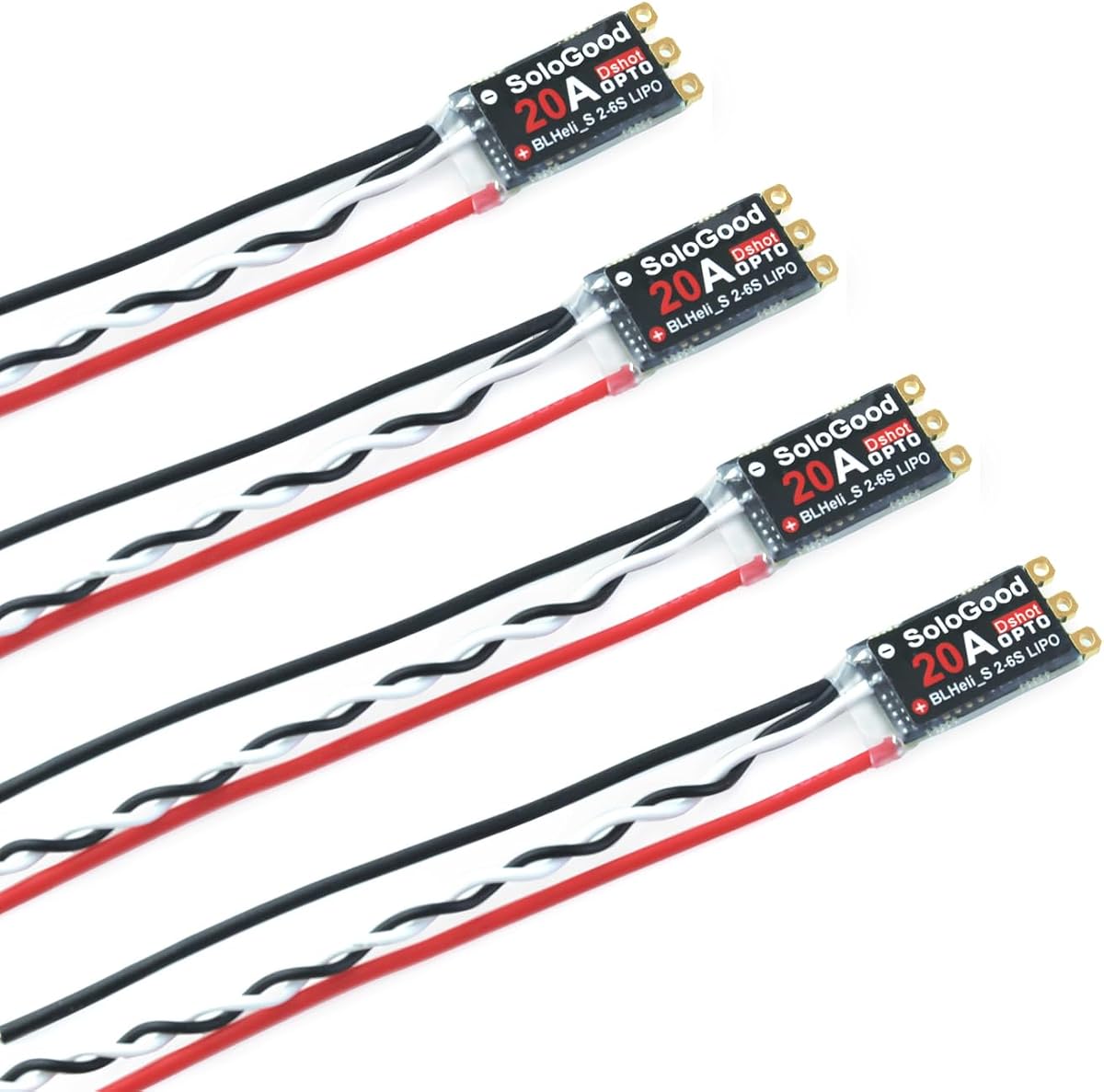
This 4-pack of 20A ESCs stands out as a top choice for builders seeking reliability and performance. It holds a solid 4.4 rating from users who value consistent throttle response during aggressive flying.
We may earn a commission when you buy through this link, at no additional cost to you.
The inclusion of BLHeli_S firmware allows for easy upgrades and customization without complex tools. Twisted pair signal cables minimize interference, ensuring clean communication between the flight controller and motors even in high EMI environments.
While the 4S battery limit restricts it from the most powerful high voltage builds, it is perfectly optimized for common 2S to 4S racing setups. The smooth speed control helps prevent motor overheating during prolonged flights.
This ESC is ideal for pilots who want a proven track record without spending a fortune. Its combination of stability and ease of use makes it a recommended starting point for new FPV racers.
Twisted pair cables reduce crosstalk significantly, leading to cleaner motor performance and less risk of signal loss during high-speed maneuvers.
BLHeli_S support means you can adjust settings like RPM filtering or motor direction easily via standard configuration tools connected through the signal cable.
We may earn a commission when you buy through this link, at no additional cost to you.
The LittleBee ESC offers a lightweight and compact solution for tight racing frames. It is designed to deliver smooth motor control with a focus on efficiency and responsiveness for freestyle pilots.
We may earn a commission when you buy through this link, at no additional cost to you.
Preloaded BLHeli_S firmware and bootloader simplify the initial setup process, allowing users to flash updates quickly. The support for DShot protocol ensures fast digital signal transmission for precise motor adjustments.
Its small 23x12mm footprint integrates seamlessly into builds where space is at a premium. However, it only supports up to 10 seconds of burst current, which may be limiting for extreme high-throttle applications.
This ESC is a solid choice for pilots prioritizing weight savings and clean installation. It performs well in standard racing conditions and offers good value for those seeking a lightweight option.
The tiny footprint allows for cleaner wiring layouts and more room for other components like flight controllers or video transmitters in small frames.
Muted mode capabilities help reduce noise and improve efficiency, extending battery life during typical racing sessions without sacrificing power.
We may earn a commission when you buy through this link, at no additional cost to you.
This 60A 4in1 ESC delivers powerful flight performance with stable output for demanding racing and freestyle applications. It holds a strong 4.3 rating among users who appreciate its robust build and current handling.
We may earn a commission when you buy through this link, at no additional cost to you.
The immersion gold design enhances resistance to heat and current stress, ensuring durability during high load scenarios. Large ESC pads allow for direct plug-in connections to the flight controller, eliminating soldering hassles.
While it supports a wide range of voltages from 2S to 6S, its 4in1 form factor might be too large for micro builds. The high current rating makes it excellent for larger frames with powerful motors.
Pilots building high-performance 6S racers will find this ESC a worthy investment. Its stable power delivery and premium materials offer peace of mind during intense competitive flights.
Immersion gold plating protects against high temperature and current resistance, extending the lifespan of the ESC during aggressive flying sessions.
Direct plug-in pads reduce soldering time and potential connection errors, streamlining the build process for both new and experienced users.
We may earn a commission when you buy through this link, at no additional cost to you.
This MAD AMPX ESC boasts an impressive perfect 5.0 rating from users, indicating exceptional performance and reliability. It is built to handle quadcopter tasks with improved throttle response and intelligent settings.
We may earn a commission when you buy through this link, at no additional cost to you.
New core software enables adaptive timing adjustments that meet most applications automatically. It supports signal frequencies above 600Hz, ensuring compatibility with a wide range of modern flight controllers.
Crosstalk reduction in signal transmission helps maintain clean control even in noisy environments. While it is priced higher than some competitors, the reliability and performance justify the investment for serious pilots.
This ESC is an excellent choice for builders seeking a hassle-free, high-reliability component. Its perfect score suggests minimal failures and high satisfaction among users who test its limits.
Adaptive default settings like auto-adjusting timing optimize performance without manual intervention, simplifying setup for varied motor types.
Reduced crosstalk ensures that control signals remain pure, preventing unexpected motor behaviors during critical flight moments.
We may earn a commission when you buy through this link, at no additional cost to you.
AGFRC offers a highly affordable option that does not compromise on essential features. With a 4.3 rating, this ESC is favored for its smooth throttle response and compatibility with DShot protocols.
We may earn a commission when you buy through this link, at no additional cost to you.
The hardware PWM drive motor ensures low noise and smooth operation, while Damped light enables make it more sensitive. It supports a wide range of digital signal protocols from DShot600 to Multishot.
Compact size and light weight make it especially suitable for competition FPV drones where every gram matters. It is a versatile choice for multirotor builds needing fast and reliable control.
Budget-conscious pilots will find this ESC a perfect entry point. It delivers the necessary performance for racing without the premium price tag, proving reliability over time.
Support for DShot, PWM, and Multishot protocols ensures compatibility with almost any modern receiver and flight controller combination.
Hardware PWM drive reduces motor noise, contributing to a quieter flying experience and less vibration during flight.
We may earn a commission when you buy through this link, at no additional cost to you.
This powerful ESC delivers optimal power and responsiveness for FPV drones needing extreme current handling. It provides 160A continuous current per channel, ensuring stable high-power output even under heavy load.
We may earn a commission when you buy through this link, at no additional cost to you.
Equipped with a large metal heat sink, it enhances heat dissipation and extends service life. The built-in ammeter supports telemetry transmission, providing real-time updates on motor temperature and current data.
The dual-pad power supply design simplifies welding and increases current-carrying capacity. While its size is significant, it is necessary for high-power 8S builds that demand superior thermal management.
Pilots building heavy-lift or extreme freestyle drones will benefit from this ESC. Its telemetry features add an extra layer of safety and monitoring during demanding flights.
Built-in ammeter sends real-time current and temperature data to your flight app, helping you monitor motor health during flight.
A large metal heat sink actively manages heat, preventing thermal throttling and maintaining consistent power during long sessions.
We may earn a commission when you buy through this link, at no additional cost to you.
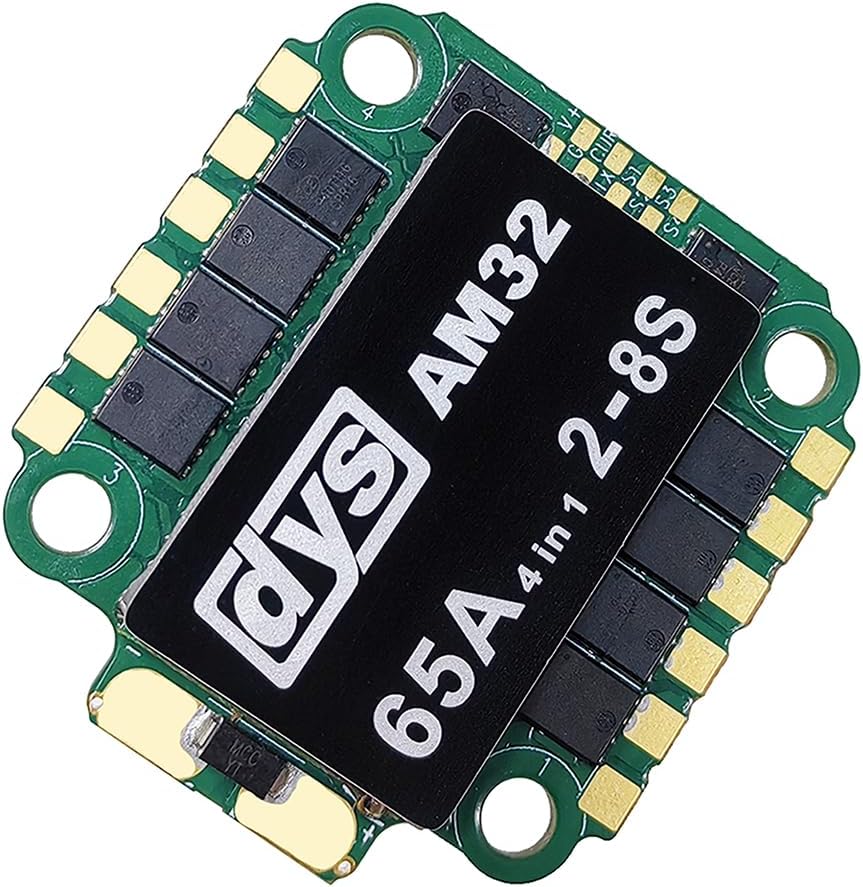
This 65A ESC uses the powerful AM32 firmware, promising precise control and robust performance for freestyle pilots. It supports a wide 2-8S input range, making it versatile for various builds.
We may earn a commission when you buy through this link, at no additional cost to you.
The upgraded MOS components offer a 15% performance improvement over previous generations. Designed to fit standard 30.5×30.5mm mounting holes, it integrates easily into common FPV frames.
However, it currently holds a lower user rating, suggesting potential inconsistencies or stability issues in the field. Users should check recent firmware updates before committing to this model.
Despite the lower rating, its features make it an option for those willing to tinker with AM32 settings. It is a solid choice for users who prefer open firmware flexibility.
AM32 firmware offers detailed tuning options and open-source benefits for pilots who enjoy customizing their ESC settings deeply.
Upgraded MOS components improve efficiency and speed, ensuring better performance even when running at higher voltages and currents.
We may earn a commission when you buy through this link, at no additional cost to you.
This AIO stack combines a 70A ESC with a powerful flight controller for a streamlined build process. It features STM32H743 MCU and supports up to 8 motors for advanced configurations.
We may earn a commission when you buy through this link, at no additional cost to you.
Integrated 5V/10V dual BEC outputs provide independent power for video systems, simplifying wiring. The onboard black box and telemetry features help record and analyze flight data efficiently.
Innovative angled solder pads reduce welding difficulty, making assembly easier. While the stack adds convenience, it may be bulkier than separate components for certain small frames.
This stack is ideal for pilots looking to minimize wire clutter and setup time. It offers a modern, integrated solution for high-performance FPV flying with robust data logging.
Dual BEC outputs ensure stable power for both flight electronics and video transmitters, reducing the risk of brownouts during flight.
16MB black box storage allows detailed flight analysis, helping you refine your piloting skills and tune your setup over time.
We may earn a commission when you buy through this link, at no additional cost to you.
Radiolink FLYCOLOR offers a well-reviewed ESC with a 4.4 rating, emphasizing smooth performance and efficient operation. It supports both Bluejay and BLHeli-S firmware for versatile protocol options.
We may earn a commission when you buy through this link, at no additional cost to you.
Hardware-generated motor PWM improves throttle response and reduces noise. The dedicated driver IC ensures smoother starting, which is crucial for consistent motor behavior during takeoff and maneuvers.
Dimensions are compact at 45 x 41mm, fitting well in high-speed racing frames. The hardware is specifically tuned to enhance performance for multirotor applications, making it a reliable choice.
This ESC is suitable for pilots who value firmware flexibility and consistent throttle handling. It delivers strong performance for racing builds that require precise motor control and low noise.
Dual support for Bluejay and BLHeli-S gives pilots choice, allowing customization of motor parameters to suit specific flight styles.
Hardware-generated PWM signals deliver faster throttle responses, critical for competitive racing and quick directional changes in the air.
We may earn a commission when you buy through this link, at no additional cost to you.
This 65A ESC uses an AT32F421 processor to deliver high efficiency and strong performance. It supports PWM frequencies up to 96 KHz, which allows for precise motor control and smooth operation.
We may earn a commission when you buy through this link, at no additional cost to you.
High-power MOSFETs ensure ultra-high efficiency conversion, reducing losses and extending flight time. The 30.5mm hole spacing fits large load-type vehicles easily while remaining compact enough for most racing frames.
Innovative angled solder pads simplify the welding process, reducing installation errors. Multi-layer PCB design increases over-current capability and heat dissipation for more reliable high-load flying.
Pilots seeking a balance of power and modern firmware options will appreciate this ESC. It offers robust features that support diverse flight profiles, from freestyle to competitive racing.
Ultra-high efficiency MOSFETs convert more battery power to motion, resulting in longer flight times and less heat generation.
Support for PWM frequencies up to 96 KHz allows for fine-grained motor control, reducing noise and improving throttle smoothness.
We may earn a commission when you buy through this link, at no additional cost to you.
Selecting the right ESC involves understanding current ratings, voltage support, firmware, and physical dimensions. This guide explains the key factors to consider before making your purchase.
The continuous current rating should exceed your motor's maximum draw to ensure safety and longevity. Burst current ratings matter for short high-load moments like takeoff.
Choose an ESC with at least 20% higher current capacity than your motor setup to prevent overheating and failures during aggressive maneuvers.
Different ESCs support varying LiPo battery voltages, typically ranging from 2S to 8S. Ensure your ESC matches the battery voltage you plan to use.
Always verify the maximum cell count supported by your ESC before building, as exceeding this limit can permanently damage the component.
Modern ESCs use protocols like DShot, MultiShot, and PWM for communication with flight controllers. DShot offers the best precision and noise immunity.
Look for ESCs with BLHeli_S or AM32 firmware, as they provide easy configuration options and reliable performance for racing applications.
The ESC must fit your frame's mounting points and leave enough room for other components. Standard sizes include 30x30mm and 20x20mm patterns.
Measure your frame and check the ESC dimensions carefully to avoid fitting issues during assembly.
Twisted pair signal cables help reduce electromagnetic interference and signal loss during flight. This detail is crucial for consistent motor response.
High-quality ESCs often include optimized cables that are more durable and resistant to noise from high-speed motors.
ESC reliability depends heavily on how well it dissipates heat. Metal heat sinks or multi-layer PCB designs enhance thermal performance significantly.
For high-power builds, prioritize ESCs with large heat sinks to ensure stable operation during long or intense flights.
Some ESCs feature direct plug-in pads for flight controllers, eliminating soldering. This can save time and reduce connection errors.
Check whether your flight controller is compatible with your chosen ESC's input signals and physical connector type before purchasing.
Reading user reviews helps identify real-world performance issues or common failures. A high rating with many reviews is a good sign of quality.
Prioritize models with consistent feedback on reliability and performance to minimize the risk of early failures.
When installing your ESC, secure it firmly to the frame using rubber dampers or screws to prevent vibration damage. Ensure all wires are neatly routed and do not touch spinning motor props.
Before first flight, calibrate your ESC using your transmitter and flight controller software. Verify that motor rotation direction matches your frame design and that throttle response is smooth.
Regularly check ESC connections for wear or heat discoloration after flights. Keeping ESCs clean and cool extends their lifespan and ensures consistent performance during racing.
BLHeli_S is a stable and widely supported firmware that offers reliable performance for most users. AM32 is open-source and allows deeper tuning, but it may require more technical knowledge to configure properly.
No, a 20A ESC rated for 2-4S batteries cannot safely handle 6S voltage. Exceeding the voltage rating will damage the ESC instantly. Always check the supported cell count before connecting higher voltage batteries.
Overheating can occur from excessive current draw or insufficient cooling. Ensure your ESC current rating exceeds your motor's demand. If using 4in1 ESCs, check that airflow is not blocked by other components.
DShot is a digital protocol that sends precise throttle commands to motors without calibration. It reduces noise and improves throttle response significantly compared to analog PWM or MultiShot.
Use tools like BLHeli Suite or DshotConfig to update ESC firmware via the signal cable. Connect your ESC to a PC and follow the flashing instructions carefully to avoid bricking the device.
A 4in1 ESC simplifies wiring for quadcopters by consolidating four units into one. It reduces clutter and soldering points, making builds cleaner and often more reliable than individual ESCs.
For racing quadcopters, choose an ESC with a continuous rating that is 20% higher than your motors maximum current draw. This provides a safety margin during aggressive throttle inputs.
Higher price often indicates better components and firmware, but expensive is not always necessary for entry-level racing. Many budget ESCs offer excellent performance if they match your technical requirements.
The ten ESCs reviewed here offer diverse options ranging from lightweight budget choices to high-power professional units. Each has unique strengths depending on your build's voltage and frame size.
Prioritize current capacity and firmware support when making your decision. A reliable ESC ensures stable throttle control and protects your motors during demanding racing sessions.
Remember to verify current availability and pricing before purchasing. Specifications and stock levels can change frequently, so checking official sources guarantees you get the right component for your quadcopter.