
Synology 2-Port 10GbE RJ-45 PCIe Network Adapter E10G30-T2
4.6Editor score
Two 10GbE Ports
Optimized for Synology Systems
Five Year Warranty Coverage
This guide compares the top 10GbE Network Card options for speed, compatibility, and value to help you choose the right adapter for your setup.
Upgrading your network infrastructure requires reliable hardware that delivers consistent performance under heavy loads. A quality 10GbE Network Card ensures your system can handle high-speed data transfers without bottlenecks or latency issues.
We evaluated ten leading adapters based on controller quality, port types, and system compatibility. Our analysis focuses on real-world performance, ease of installation, and support for modern operating systems and virtualization platforms.
Each selection below highlights specific strengths for different user needs ranging from home labs to enterprise servers. Note that product availability and pricing fluctuate frequently so check current listings before making your final purchase decision today.
4.6Editor score

4.2Editor score

4.4Editor score
The following table provides a side-by-side overview of all ten selected adapters focusing on key specifications and interface types to help you quickly identify the model that fits your hardware requirements.




The TP-Link TX401 stands out as a leading choice for users seeking reliable 10GbE connectivity without complex setup procedures. It offers consistent performance across Windows and Linux environments making it ideal for home labs and small offices.
We may earn a commission when you buy through this link, at no additional cost to you.
Its use of 10GBase-T technology allows direct connection to standard copper cabling which simplifies network upgrades. The included CAT6A cable ensures you can achieve full speed immediately upon installation without needing extra purchases.
While it lacks optical ports for specialized data center use the RJ45 design fits most standard networking needs. Users should ensure their case has adequate airflow since the card runs passively without a fan.
This adapter is perfect for anyone needing a straightforward upgrade from Gigabit to 10G. With broad OS support and a solid warranty it delivers excellent value for money in the current market.
The TX401 automatically negotiates speed to match your switch or router ranging from 10Gbps down to 100Mbps ensuring seamless integration into existing networks.
Full compatibility extends to Windows servers and various Linux distributions allowing flexible deployment across diverse computing environments without driver conflicts.
We may earn a commission when you buy through this link, at no additional cost to you.
Designed specifically for Synology NAS systems this dual-port adapter delivers enterprise-grade reliability and performance for storage applications. It ensures your data transfers remain fast and stable even under heavy workloads.
We may earn a commission when you buy through this link, at no additional cost to you.
The dual port configuration allows for link aggregation or failover setups which are critical for business continuity. Its integration with DSM software means you can manage settings directly through your NAS interface.
While the price is higher than generic alternatives the specialized optimization justifies the cost for Synology users. The five year warranty provides long-term peace of mind regarding hardware longevity and support.
This card is the top choice for Synology owners requiring maximum throughput and redundancy. It simplifies storage networking by combining hardware performance with deep software integration.
Engineered specifically for Synology systems this adapter ensures seamless compatibility and optimized performance for your network attached storage environment.
A five year limited warranty backs this adapter reflecting confidence in its build quality and long-term stability for demanding storage applications.
We may earn a commission when you buy through this link, at no additional cost to you.
This 10Gtek card offers a cost-effective entry point into 10GbE networking using a proven Intel controller known for stability in server environments. It is ideal for virtualization and storage setups.
We may earn a commission when you buy through this link, at no additional cost to you.
The SFP+ port gives you flexibility to choose optical or DAC cables based on your distance needs. Using an Intel controller ensures broad driver support across VMware and Linux platforms.
Keep in mind you must purchase SFP+ modules separately which adds to the initial cost. Also note it does not auto negotiate to lower speeds like 2.5G so manual config may be needed.
For budget conscious users building a home lab or server this card provides reliable performance without breaking the bank. Its solid build and support make it a strong value proposition.
Equipped with a genuine Intel 82599EN controller this card ensures stable server performance and efficient I/O virtualization for demanding workloads.
Support for ESX and ESXi environments makes this adapter a great choice for users running virtual machines on their local hardware.
We may earn a commission when you buy through this link, at no additional cost to you.
Powered by the Realtek RTL8127 chipset this card brings modern efficiency to 10GbE networking with support for various speed tiers up to 10Gbps. It works well with home labs and media editing.
We may earn a commission when you buy through this link, at no additional cost to you.
The PCIe 4.0 x1 interface allows it to fit in narrow slots leaving room for other components. This makes it a great choice for mini PCs and compact workstation builds.
Users should be prepared to install drivers manually on Linux systems as it may not be recognized out of the box. Ensure your case provides sufficient airflow to keep the card cool during use.
This adapter is recommended for users needing a compact and efficient solution for upgrading their network. Its flexible bracket options and multi-gig support add significant value to small builds.
Designed with a PCIe 4.0 x1 interface this card maximizes slot efficiency allowing installation in compact systems without sacrificing full 10GbE performance.
Supports automatic negotiation across multiple speeds ensuring seamless integration with routers and switches that may not support 10Gbps directly.
We may earn a commission when you buy through this link, at no additional cost to you.
This dual port adapter uses the Intel X550AT2 controller to provide stable high-speed networking for servers and workstations. It supports a wide range of operating systems including FreeBSD.
We may earn a commission when you buy through this link, at no additional cost to you.
The dual RJ45 ports allow you to aggregate bandwidth or set up redundancy without needing an extra card. Included firmware tools make it easy to keep the adapter up to date remotely.
Note that you may need to manually configure speeds like 2.5G if auto negotiation fails. This is a known quirk of the chipset but can be resolved with simple settings changes.
Ideal for users needing dual copper connections this card balances performance with flexibility. Its support for virtualization and server OS makes it a robust choice for home labs.
Dual copper RJ45 ports enable advanced network configurations like link aggregation or failover without adding extra hardware to your system.
Equipped with official NVM Update Utility this card allows firmware refreshes without booting into BIOS which minimizes downtime for servers.
We may earn a commission when you buy through this link, at no additional cost to you.
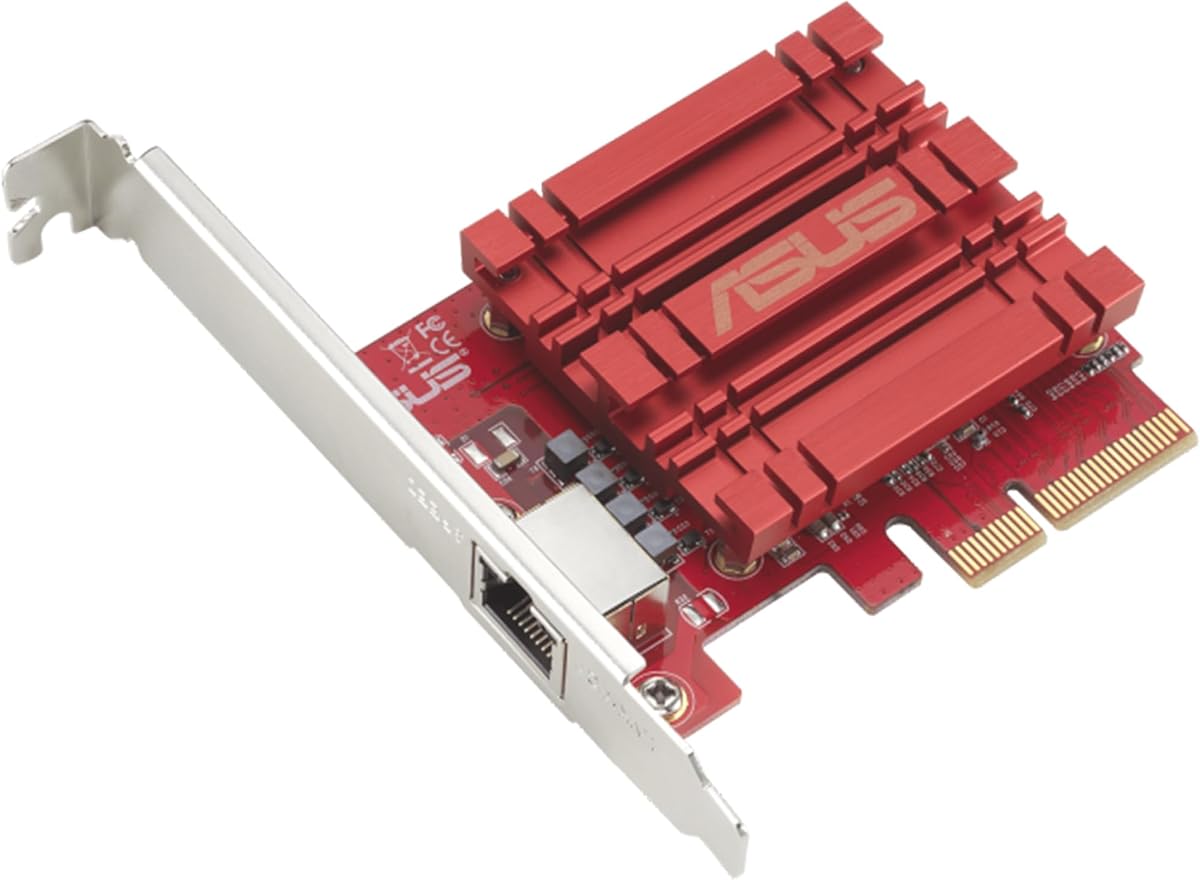
Asus provides a solid networking solution with this adapter that delivers consistent 10Gbps performance for bandwidth demanding tasks. It is designed for straightforward upgrade of standard desktop systems.
We may earn a commission when you buy through this link, at no additional cost to you.
The QoS technology helps prioritize data packets to ensure smooth online experiences during heavy usage. This is particularly useful for gaming or streaming setups where latency matters.
Users should verify Linux kernel compatibility before purchasing as support varies by version. Ensure your case has enough room for the heatsink to prevent overheating during extended use.
This card is a good option for users seeking a branded reliable solution for their desktop. Its compatibility with existing copper cabling makes transitioning to 10G straightforward and affordable.
Built-in Quality-of-Service technology allows you to prioritize specific data packets for a smoother online experience during high network activity.
Full compatibility with current network standards ensures seamless backward compatibility with older routers and switches in your network infrastructure.
We may earn a commission when you buy through this link, at no additional cost to you.
This single-port adapter is validated specifically for full compatibility and performance with Synology systems ensuring smooth integration into your NAS setup. It offers high performance for storage needs.
We may earn a commission when you buy through this link, at no additional cost to you.
The auto-negotiation feature allows it to work seamlessly with existing network equipment ranging from 100 Mbps up to 10Gbps. This flexibility simplifies network management and reduces manual configuration.
While it lacks redundancy options the performance and stability make it a solid choice for standard deployments. The five year limited warranty from Synology covers potential hardware issues comprehensively.
Synology owners looking for a guaranteed compatible upgrade should consider this adapter. Its specialized design ensures optimal performance for storage and networking applications within the Synology ecosystem.
Validated for full compatibility and performance with Synology systems this adapter ensures reliable operation within your network attached storage environment.
Covered by Synology's five year limited warranty this product offers peace of mind and long-term support for your networking infrastructure.
We may earn a commission when you buy through this link, at no additional cost to you.
This card features genuine Intel 82599EN silicon with an open SFP+ cage that accepts third-party optics without vendor lock-in issues. It works natively on Proxmox TrueNAS and Unraid systems.
We may earn a commission when you buy through this link, at no additional cost to you.
The ability to use generic DAC cables or optics saves money while maintaining high throughput. Plug and play detection on Linux systems makes setup quick without complex driver installation steps.
Ensure your case has enough airflow since the passive heatsink runs warm by design to dissipate heat. If silent operation is critical you may need to clip a small fan to it.
This adapter is ideal for server builders needing flexible optical connectivity on a budget. Its open cage design and broad compatibility make it a favorite for home lab enthusiasts.
No vendor lock on the SFP+ cage allows you to use third-party DAC twinax or optics without rejection issues.
Detected by Proxmox and TrueNAS without driver steps simplifies setup for virtualization and server users significantly.
We may earn a commission when you buy through this link, at no additional cost to you.
TRENDnet offers a compliant networking adapter that meets specific standards required by government and enterprise customers. It is designed for reliable performance with standard copper cabling.
We may earn a commission when you buy through this link, at no additional cost to you.
The inclusion of 2.5GBASE-T support allows flexible connectivity with various switch speeds. English speaking tech support adds value for users who may need assistance during installation.
Be aware that NDAA and TAA compliance applies only to U.S. and Canada regions so check your local requirements. The three year protection plan adds to the overall value of this product.
This adapter is recommended for professional environments where compliance and support are priorities. Its reliability and flexible speed support make it a sturdy choice for office upgrades.
NDAA and TAA compliant network adapters help meet planning requirements for government customers in the U.S. and Canada today.
A team of advisors and tech experts are available during normal business hours to assist with all your networking needs effectively.
We may earn a commission when you buy through this link, at no additional cost to you.
Equipped with an original Intel X550-AT2 controller this card brings stability to server environments at an affordable price point. It supports a variety of operating systems including FreeBSD.
We may earn a commission when you buy through this link, at no additional cost to you.
The single RJ45 port simplifies the design making it easier to install in smaller server cases. Lifetime technology support and a thirty day return policy offer reassurance to buyers.
Be aware that firmware updates are not supported for this model so ensure it meets your long-term needs. Manual configuration may be needed for certain speeds like 2.5G depending on the switch.
This adapter is a solid value choice for users needing a single port Intel solution. Its support for FreeBSD and Linux makes it versatile for specialized server setups.
Equipped with original Intel X550-AT2 controller chip this product makes servers more stable without the need for complex configuration.
Compatible with Windows Server and Linux systems allowing flexible deployment across diverse computing environments without driver conflicts.
We may earn a commission when you buy through this link, at no additional cost to you.
Selecting the right 10GbE Network Card requires considering several technical factors to ensure compatibility with your current hardware and future needs.
Decide whether you need copper RJ45 ports or fiber SFP+ ports. Copper uses standard Cat6a cables for shorter distances while SFP+ allows flexible optical modules for longer runs.
Choose copper for simplicity and SFP+ for long-range or specialized setups.
Check your motherboard for available PCIe slots. Most modern cards use PCIe 3.0 or 4.0 x4 or x8 lanes. Ensure your slot matches the card to avoid bandwidth throttling.
Match the card's lane requirements with your available slots for best performance.
Verify that the card supports your specific OS version. Windows is broadly supported but Linux and FreeBSD may require specific kernel versions or driver installations.
Check driver availability for your OS before purchasing to avoid installation issues.
If you run VMs or use a NAS check for specific certifications like VMware ESXi or Synology DSM compatibility. Some cards are optimized for these environments.
Look for cards validated for your virtualization platform or NAS system.
Modern adapters support auto-negotiation across speeds like 10Gbps 5Gbps and 2.5Gbps. Ensure the card negotiates correctly with your router or switch to avoid manual config.
Prioritize cards with auto-negotiation for seamless network integration.
Most 10GbE cards use passive heatsinks. Ensure your case has sufficient airflow or consider adding a small fan to prevent thermal throttling during heavy loads.
Check case airflow before choosing a passive-cooled card.
Look for cards with at least a two or three year warranty. Brands with dedicated support channels can help troubleshoot driver or hardware issues quickly.
Opt for brands offering longer warranties for better peace of mind.
Measure your PC case height. Many cards include both standard and low-profile brackets to fit mini-towers or small form factor systems comfortably.
Ensure the included bracket matches your case size for easy installation.
Power down your computer and unplug the power cable before installation. Ground yourself to avoid static discharge. Install the card into the appropriate PCIe slot and secure the bracket screws.
Install the necessary drivers from the manufacturer website or use the provided disc. Once installed verify the connection status in your OS network settings to ensure the link is active.
Regularly check for firmware updates using the vendor tools to maintain performance. Keep the heatsink clean of dust and ensure airflow remains unobstructed to prevent overheating.
You can use standard Cat6a cables for 10Gbps over short distances. For longer runs or better performance fiber optic cables with SFP+ modules may be required.
It will work with existing routers but speeds will drop to the router's limit unless the router supports 10G. Ensure your switch or router is also 10G capable.
Check your motherboard manual for available PCIe slots and their versions. Most modern boards support PCIe 3.0 or higher which works with 10GbE cards.
Many cards support Linux but you may need to download drivers or install kernel modules. Check compatibility lists before buying if you rely on Linux.
Yes it can reduce latency if your ISP and local network support 10G. It is more beneficial for local file transfers than internet gaming which depends on your connection speed.
Most cards use passive heatsinks. If your case has poor airflow adding a small fan may be needed to prevent the card from getting too hot.
The TP-Link TX401 offers an excellent balance of features for general users while Synology adapters provide the best integration for NAS enthusiasts. Budget builders may prefer the Intel-based options for stability.
Prioritize compatibility with your OS and physical slot type before focusing on speed. Ensure your network infrastructure can support 10G to fully benefit from the upgrade.
Remember to check current availability and stock levels as these components vary in supply. A small amount of research ensures you select a model that fits your specific needs perfectly.