
Surecom SF401 Plus 27Mhz-3000Mhz Radio Portable Frequency Counter Meter
4.3Editor score
Wide frequency range coverage
Portable handheld design
CTCSS and DCS decoder
This guide compares the top 10 frequency counter for ham radio options to help you choose the right tool for accurate signal measurement and maintenance tasks.
Finding a reliable frequency counter for ham radio is essential for precise tuning and maintenance. Whether you are testing walkie talkies or calibrating high power transmitters, the right tool ensures your signals stay within legal and technical boundaries for optimal performance.
We have evaluated ten top rated products based on accuracy, range, portability, and user feedback. Our comparison covers budget friendly handheld meters and advanced units with GPSDO stability to help you make an informed decision for your station needs.
Each pick highlights key specifications and real world performance details. While we aim for accuracy, prices and availability change frequently. Always verify current specs before purchasing to ensure the model meets your specific frequency and calibration requirements.
4.3Editor score

5.0Editor score

4.4Editor score
This side by side comparison table lists all ten selected frequency counter units. It highlights key specifications like frequency range and resolution to help you quickly identify the model that fits your specific testing and calibration needs.


The AURSINC TinyGTC stands out as the top pick for serious ham radio enthusiasts and technicians. With its built-in GPSDO it delivers professional grade accuracy and stability that exceeds typical handheld units. The device supports a wide frequency range and features advanced time interval measurement capabilities.
We may earn a commission when you buy through this link, at no additional cost to you.
Its dual channel design allows for precise frequency and phase measurements. The 40ps resolution ensures that even subtle shifts in signal timing are captured accurately. Users can rely on the GPS disciplined oscillator for consistent performance over long periods without needing external calibration sources.
While the device offers extensive features, it requires a GPS signal to achieve its highest precision levels. The larger screen and battery consumption might be concerns for ultra portable field use compared to simpler counters. However, for calibration and detailed RF testing these trade-offs are minimal.
This unit is ideal for users who need high precision beyond basic frequency counting. Whether you are tuning SDRs or verifying oscillator stability the TinyGTC provides the tools necessary for professional results. Its compact form factor makes it feasible for both bench and field work.
The integrated GPSDO locks to atomic time standards ensuring frequency stability that rivals lab equipment.
Built-in histogram and FFT analysis provide deep insights into signal quality without needing a PC.
We may earn a commission when you buy through this link, at no additional cost to you.
The Surecom SF401 Plus offers a balanced combination of features and affordability for casual ham operators. It covers the essential frequency bands used by most walkie talkies and amateur radios. Users appreciate its simplicity and the included antennas that simplify setup.
We may earn a commission when you buy through this link, at no additional cost to you.
It features a TCXO oscillator that provides reasonable accuracy within standard operating temperatures. The built-in decoder helps identify CTCSS and DCS tones which is useful for verifying repeater settings. The small form factor makes it easy to keep in a tool kit.
While it handles most common tasks well it is not designed for wide bandwidth measurements. The accuracy can drift slightly in extreme temperatures which may affect precision work. For routine checks this drift is generally acceptable for the price.
This meter is best suited for hobbyists needing a quick way to verify transmit frequencies. It avoids unnecessary complexity while delivering reliable results for daily maintenance tasks. It remains a solid choice for those prioritizing value over advanced specs.
The built-in decoder allows users to quickly check tone squelch settings without additional equipment.
Simple buttons let you switch between frequency ranges quickly to match your test signal.
We may earn a commission when you buy through this link, at no additional cost to you.
The FC-2800M targets users who need reliable accuracy across CB and amateur bands. It offers two selectable frequency ranges that simplify testing for different radio types. The low PPM crystal time base ensures that readings remain stable and trustworthy.
We may earn a commission when you buy through this link, at no additional cost to you.
Users value the built-in DCS CTCSS decoder which streamlines verification of tone encoded signals. The compact design allows for easy transport between sites without sacrificing functionality. The four button interface keeps operations straightforward even in the field.
While the decoder is helpful it might be unnecessary for users who only need basic frequency counts. The price is higher than entry-level meters but reflects the improved stability and warranty coverage. This trade-off is worthwhile for professional or frequent use.
This counter is recommended for maintenance personnel and serious enthusiasts who prioritize precision. It covers essential bands with enough accuracy for regulatory compliance checks. The warranty adds peace of mind for long-term ownership and reliability.
The low PPM crystal ensures accurate measurements even without external GPS reference.
Choosing between VHF UHF ranges simplifies setup for different transceiver testing needs.
We may earn a commission when you buy through this link, at no additional cost to you.
The TinySA is a versatile tool for those needing visual spectrum insights alongside frequency counting. It displays signals in a graphical format that helps identify interference and harmonics easily. The built-in signal generator adds utility for testing receiver responses.
We may earn a commission when you buy through this link, at no additional cost to you.
Its color touchscreen provides detailed scan points making it easier to spot anomalies in the RF environment. USB connectivity allows for remote analysis and control which expands its utility in lab settings. The compact design fits well in field kits.
The upper frequency limit of 960MHz restricts use for higher microwave bands. Users may find the interface requires time to master compared to simple digital counters. However the visual feedback offers unique advantages for troubleshooting complex RF issues.
This device suits users who want more than basic frequency counts. It is ideal for antenna analysis and general RF troubleshooting where visual context matters. The included cables and pen make it ready for immediate use upon arrival.
Viewing signals on a spectrum screen helps identify noise and interference sources quickly.
The internal generator allows testing of receiver sensitivity and response without external gear.
We may earn a commission when you buy through this link, at no additional cost to you.
This unit is designed for users who primarily work within standard VHF and UHF bands. Its minimal interface reduces distractions by focusing on essential testing functions. The compact size makes it exceptionally portable for quick field checks.
We may earn a commission when you buy through this link, at no additional cost to you.
It operates on standard 9V batteries which simplifies power management for remote work. The decoder capabilities support tone verification for walkie talkies and radios in the covered range. Users value its simplicity for routine verification tasks.
The limited frequency coverage makes it unsuitable for HF or higher UHF testing. It lacks advanced stability features found in more expensive models but serves well for basic needs. The one button design reduces operational complexity significantly.
It is best for technicians maintaining commercial two-way radio fleets. The focused range and simple controls speed up verification processes on site. For broader amateur needs a wider range unit would be more appropriate.
A single button interface minimizes learning time and reduces setup effort in the field.
The tiny footprint allows it to fit in small tool bags alongside other essential gear.
We may earn a commission when you buy through this link, at no additional cost to you.
The Anysecu SF-103 provides an upgrade path for users seeking wider frequency coverage than entry models. It maintains a familiar interface that keeps operations straightforward. The signal strength indicator helps optimize antenna placement during testing.
We may earn a commission when you buy through this link, at no additional cost to you.
It covers most common ham and commercial radio bands making it versatile for general maintenance. The portable design ensures it can be used in various environments. Users appreciate the balance between capability and ease of use.
While it covers a wide range it lacks the high precision stability needed for calibration work. The indicator helps but does not provide detailed analysis. This makes it suitable for verification rather than fine tuning.
This meter is recommended for field technicians needing a reliable tool for quick checks. It avoids unnecessary complexity while covering essential bands effectively. For most daily tasks its performance is sufficient and dependable.
Supporting 2MHz to 2.8GHz allows testing of diverse equipment in a single unit.
Visual feedback on signal strength helps position antennas for optimal measurement results.
We may earn a commission when you buy through this link, at no additional cost to you.
The Mcbazel SF-103 offers robust performance for standard radio testing tasks. It incorporates a temperature compensated oscillator to improve accuracy across different climates. The handheld design makes it practical for on-site verification without bulk.
We may earn a commission when you buy through this link, at no additional cost to you.
Users benefit from the wide frequency span which covers most common two-way radio bands. The interface remains simple ensuring quick setup for frequent use. It provides consistent readings for routine maintenance and signal checks.
The warning against direct antenna connection highlights a safety precaution to prevent damage. While effective for standard signals it is not designed for high power or specialized RF analysis. Proper handling ensures longevity and reliable performance.
This unit suits maintenance personnel who need consistent results without complex setup. It balances accuracy and portability effectively for general field work. For most hobbyist and commercial needs it performs well within its limits.
The TCXO maintains accuracy even when operating in varying environmental temperatures.
The lightweight form factor ensures it can be carried comfortably during long shifts.
We may earn a commission when you buy through this link, at no additional cost to you.
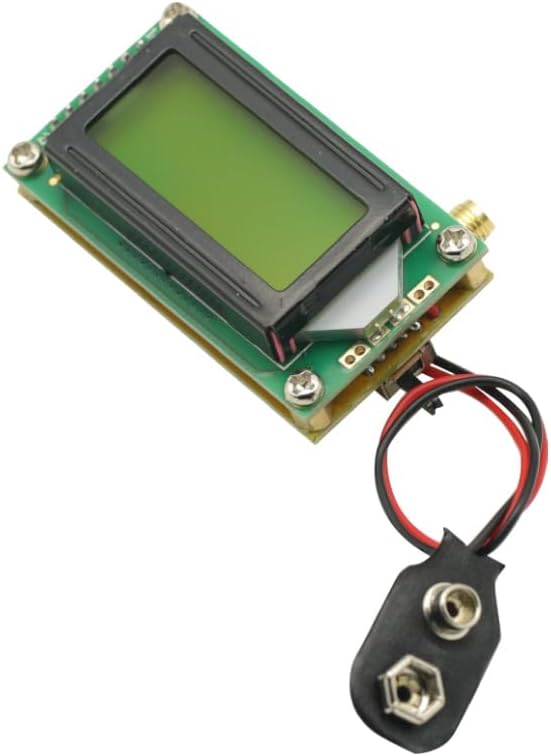
This module offers a budget friendly entry point for basic frequency measurement tasks. It provides a simple digital readout for signals within the specified range. Users with technical skills can integrate it into custom projects easily.
We may earn a commission when you buy through this link, at no additional cost to you.
The PCB build keeps costs low but limits overall precision. It is suitable for educational purposes or rough estimates rather than exact calibration. The material quality ensures basic durability for light testing use.
Precision is adjusted only to decimal places which may not meet strict standards. The module lacks casing or advanced interfaces found in standalone meters. This makes it best for users comfortable with electronics basics.
It is ideal for students or hobbyists experimenting with RF circuits. The low price allows for experimentation without significant financial risk. For serious field use a complete meter is a better investment.
Its simplicity makes it a good tool for learning how frequency counters function.
The module format allows builders to incorporate it into larger test setups.
We may earn a commission when you buy through this link, at no additional cost to you.
This board is designed for DIY enthusiasts who enjoy building their own test equipment. It offers a low power design that extends battery life for portable projects. The included LCD provides clear readouts for basic frequency tracking.
We may earn a commission when you buy through this link, at no additional cost to you.
Users with soldering skills can integrate this into custom test setups easily. It works well for measuring frequencies within the 1MHz to 500MHz range. The kit format allows for flexibility in mounting and housing.
The assembly process requires patience and technical knowledge. It is not ready to use out of the box like commercial meters. Performance is adequate for hobby level testing but lacks professional calibration options.
It is recommended for makers and students wanting to learn about RF measurement. The low power consumption supports battery powered field experiments. For reliable professional results a commercial unit is more suitable.
Optimized circuits help extend battery life during extended measurement sessions.
Users can design cases to fit specific needs for their testing environment.
We may earn a commission when you buy through this link, at no additional cost to you.
This model represents the pinnacle of portable frequency measurement capabilities. It reaches frequencies up to 7GHz covering a vast spectrum of RF work. The GPSDO ensures that long-term measurements remain stable and accurate.
We may earn a commission when you buy through this link, at no additional cost to you.
The 40ps resolution enables precise phase and interval measurements essential for advanced calibration. Users can log data and analyze it remotely which aids in detailed reporting. The touchscreen interface simplifies complex settings.
GPS lock is necessary to utilize the full stability potential which may limit indoor use. The cost reflects its high-end specs which might be unnecessary for basic checks. For advanced users these limits are manageable.
It is the ideal choice for professionals needing lab-grade results in the field. SDR enthusiasts and calibration technicians benefit most from its capabilities. Investing in this unit provides a long-term solution for demanding tasks.
Supporting frequencies up to 7GHz allows testing of modern high-bandwidth equipment.
Interactive menus make adjusting settings and viewing data quick and intuitive.
We may earn a commission when you buy through this link, at no additional cost to you.
Selecting the right frequency counter requires understanding your specific measurement needs and operating environment. This section outlines the key factors to consider when evaluating portable units for ham radio use.
Ensure the device covers the frequencies you need to test. Most ham operators require coverage from VHF to UHF with many needing up to 2GHz or higher. A wider range offers more versatility but may increase complexity and cost.
Choose a unit that matches your typical operating bands to avoid missing critical signals.
High accuracy depends on the oscillator quality inside the device. TCXO models provide better stability across temperatures compared to basic crystals. For calibration work GPSDO technology offers the highest precision available in portable tools.
Prioritize units with low PPM ratings if precision is more important than general checks.
Handheld units should be lightweight and durable enough for field work. Consider battery type and life to ensure the device lasts through a full day of testing. Compact designs are easier to transport but might sacrifice some features.
Look for models with standard battery options to simplify power management on site.
Built-in CTCSS and DCS decoders help verify tone settings directly without extra gear. This saves time when testing repeaters or commercial radios. However it may add cost for users who only need raw frequency numbers.
Select decoders only if your workflow requires regular tone verification tasks.
High power transmitters can damage sensitive counters if input limits are exceeded. Ensure the device has warning indicators and supports attenuators for high power inputs. Protecting the unit extends its lifespan and maintains accuracy over time.
Always check input specs to avoid accidental damage during powerful signal tests.
Clear displays allow easy reading of numbers under various lighting conditions. Simple button layouts reduce setup time in the field while touch screens offer richer analysis. Match the interface style to your comfort level with electronics.
Test readability or reviews if possible to ensure the screen works for you.
Some units include signal generators or spectrum analysis for broader testing utility. These features expand the device usefulness for antenna tuning or interference hunting. However they may require more power and learning to use effectively.
Decide if you need analysis tools beyond basic counting before adding cost.
A solid warranty indicates manufacturer confidence and protects your investment from defects. Reliable technical support helps resolve setup issues quickly when they arise. Review support terms to ensure long-term service is available for your model.
Choose brands that offer clear support channels and reasonable warranty periods.
Connect the unit using the provided cables and ensure proper grounding to avoid signal noise. Place the counter near the signal source for optimal reception and accurate readings. Always follow input voltage limits to prevent permanent damage to the unit.
Calibrate the device periodically according to manufacturer guidelines to maintain accuracy. For GPSDO models allow enough time to lock onto satellite signals for best results. Regular calibration ensures that your measurements remain reliable over extended periods.
Store the counter in a cool dry place away from extreme temperatures and direct sunlight. Use protective cases during transport to shield the device from impacts and dust. Keep firmware updated if supported to benefit from performance improvements and fixes.
A frequency counter allows users to measure the exact frequency of radio signals transmitted or received. This is essential for ensuring compliance with amateur radio band limits and verifying proper operation. It helps prevent interference by confirming transmitters stay within authorized channels.
GPSDO locks the internal oscillator to precise atomic time signals from GPS satellites. This eliminates drift caused by temperature or age ensuring long-term stability. It provides lab-grade accuracy without requiring frequent external calibration.
Basic handheld units may lack the precision needed for critical calibration work. However high-end models with TCXO or GPSDO can handle professional tasks reliably. Always check specifications before trusting a device for sensitive measurements.
For most ham operators a range covering 2MHz to 2.8GHz is ideal. This includes HF VHF and UHF bands commonly used for voice and data. Wider ranges offer more flexibility but may come with higher costs.
Most counters measure continuous wave signals from transmitters or oscillators directly. They may need signal sampling to measure received signals without overloading the input. Always check the manual for receive mode limitations and requirements.
Annual calibration is recommended for units used in professional or strict compliance settings. Hobbyists may calibrate less frequently depending on usage intensity and environmental conditions. Refer to manufacturer guidelines for optimal intervals.
We have reviewed ten distinct frequency counters ranging from budget friendly tools to high precision lab grade units. Each model offers unique strengths depending on your specific testing needs and budget constraints.
Prioritize accuracy and range if you need professional reliability for calibration or complex interference hunting. For general maintenance simpler handheld models provide sufficient functionality at a lower cost and greater portability.
Prices and availability change frequently so verify current specs before purchasing any model. Always ensure the selected unit meets your technical requirements to maximize value and performance for your station.