
SVBONY SV172 Lens Warmer
4.6Editor score
USB powered convenience
Lightweight portable design
Quick even heating
Dew formation can ruin your night of stargazing by fogging up optics and halting your session. Proper heating strips prevent condensation and ensure clear views for hours of observing or imaging under the stars.
We analyzed ten high-rated models based on power sources, material quality, and temperature control features. Each option offers unique benefits for different telescope types and budget constraints to suit every observer.
Each pick highlights specific strengths like USB convenience or 12V reliability with detailed specs to help you decide. Note that prices and availability may change so check current listings before purchasing your gear.
4.6Editor score

4.7Editor score

5.0Editor score
As an Amazon Associate we earn from qualifying purchases.
The following table provides a side-by-side overview of all ten products including key specifications and features to help you quickly compare options for your telescope setup.


The SVBONY SV192 stands out as a top choice with its 480mm strip designed for primary mirrors below 152mm. It holds a strong rating due to its reliable heating performance and thoughtful design features for astronomers.
We may earn a commission when you buy through this link, at no additional cost to you.
Its three speed regulator allows you to fine tune temperature based on conditions ensuring efficient energy use. The SBR and Black-T insulation material reduces heat dissipation helping maintain optimal lens warmth without excessive power draw.
While it needs a 12V power input which may limit portability compared to USB options this requirement ensures consistent and strong heating for longer sessions. The female interface is standard so it connects easily to most dew controllers.
This model is ideal for serious observers who need dependable protection against fogging on larger optics. Its build quality and thermal efficiency make it a trustworthy investment for clear nights under the stars.
The three speed regulator provides precise adjustment to match varying humidity levels without overheating the optics.
Multiple insulation layers trap heat effectively ensuring the lens stays dry throughout long exposure imaging sessions.
We may earn a commission when you buy through this link, at no additional cost to you.
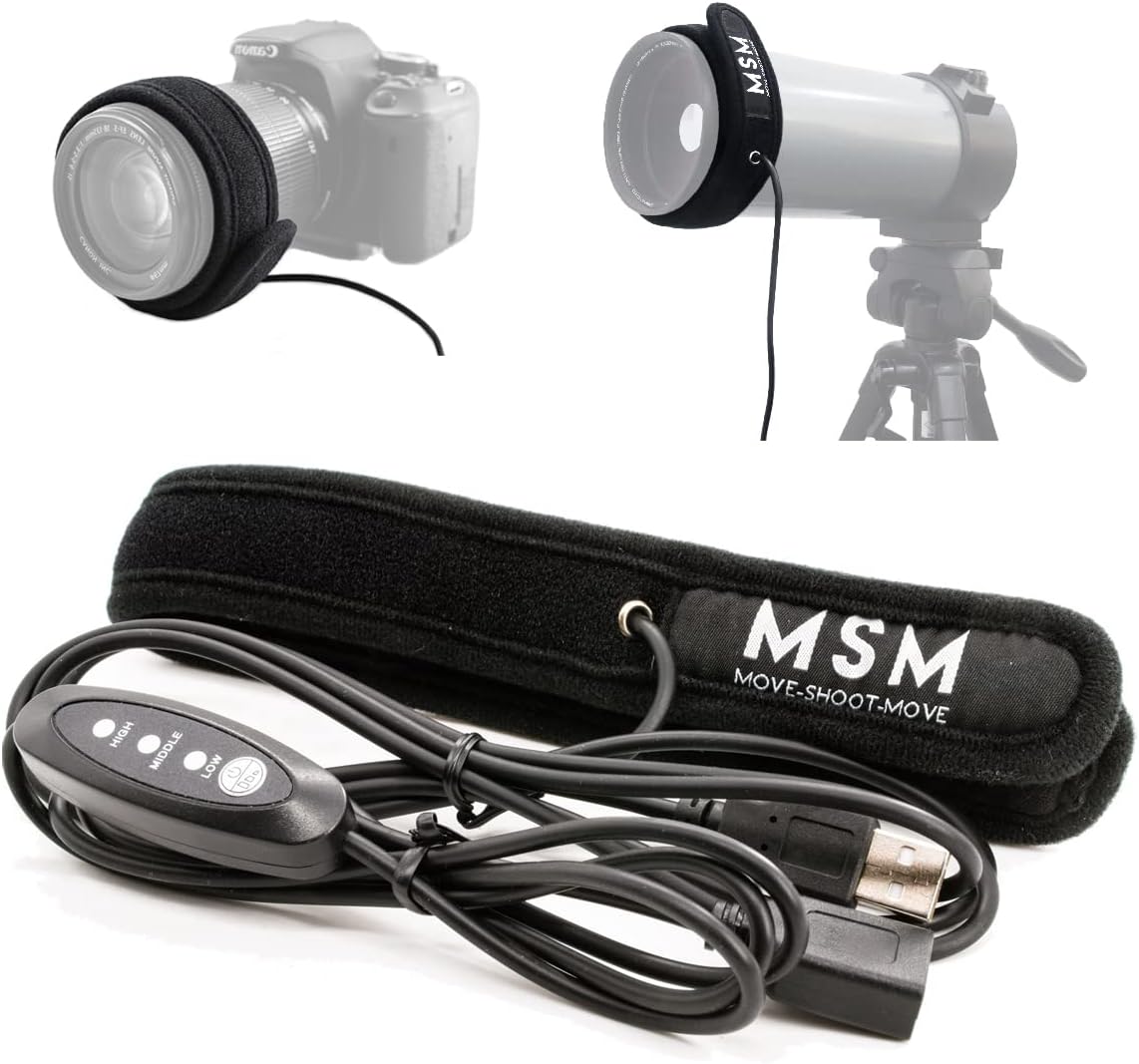
The SVBONY SV172 offers exceptional value for beginners or those needing a lightweight solution. Its USB design means you can power it from a bank making it easy to take to dark sky sites without heavy gear.
We may earn a commission when you buy through this link, at no additional cost to you.
Built with an aluminum core and alloy fiber wires it heats up quickly and evenly to prevent dew formation efficiently. The three gear heating modes let you adjust power levels to suit different weather conditions throughout the night.
While it is limited to lenses below 76mm and relies on 5V power which may be less potent than 12V models it works well for cameras and smaller refractors. The narrow width ensures it does not interfere with focusing or create shadows.
This heater is perfect for portable setups or backup protection on secondary optics. Its convenience and affordability make it a highly recommended choice for casual observers and astrophotographers on a budget.
Using a standard USB port allows you to connect to power banks or laptops for easy access during remote sessions.
The compact width and diameter limit ensure no interference with focusing mechanisms on smaller camera or telescope optics.
We may earn a commission when you buy through this link, at no additional cost to you.
R-Sky Astro Instruments delivers a premium experience with hand assembled strips designed for reliability and longevity. Perfect 5.0 rating reflects user satisfaction with its consistent performance and attention to detail in construction and materials.
We may earn a commission when you buy through this link, at no additional cost to you.
The special construction ensures uniform heat distribution across the entire band preventing cold spots that could lead to condensation. The power cord remains flexible even in sub-zero temperatures which is critical for late winter observing sessions.
While it comes at a higher cost than generic brands the quality and durability justify the investment for serious astronomers. The variety of sizes available means you can find an exact match for your specific telescope tube or corrector plate.
This strip is best for those who prioritize long term reliability and exact fit over initial savings. Its robust design and consistent heating make it a top choice for professional or high-end amateur setups.
Specialized internal wiring ensures heat spreads evenly so no part of the lens cools down and fogs up unexpectedly.
The power cord is engineered to stay soft and functional in freezing conditions preventing cracks or breaks during use.
We may earn a commission when you buy through this link, at no additional cost to you.
This model features a neoprene strip designed to stay flexible down to -25℃ ensuring reliable use even in harsh winter conditions. Its 350mm length covers a wide range of lenses and telescopes making it a versatile tool for various equipment.
We may earn a commission when you buy through this link, at no additional cost to you.
The heater includes a temperature regulator on the power cable offering three incremental levels for precise heat control. It warms up quickly to keep your lens dry during long exposures without requiring a bulky external power controller.
While the long USB cable adds convenience it can be prone to tangling if not managed well during setup. The USB power requirement limits output slightly compared to 12V systems but it is sufficient for most small to mid sized optics.
Ideal for cold climate observers who need a durable and portable solution this heater balances flexibility and performance well. Its construction and ease of use make it a strong contender for backyard imaging sessions.
The neoprene material remains pliable in freezing temperatures so you can wrap it tightly without cracking or breaking.
Having the regulator built into the cable simplifies your setup by reducing extra components between power and lens.
We may earn a commission when you buy through this link, at no additional cost to you.
Designed specifically for Celestron 8 inch Schmidt Cassegrain and similar models this ring ensures a perfect fit without guesswork. The aluminum construction provides rigidity and supports cable circuitry for a clean and secure installation on your scope.
We may earn a commission when you buy through this link, at no additional cost to you.
It includes a cable management clip to help corral essential wires and reduce unnecessary weight on your optical tube. Powered by a standard 12V DC source it delivers continuous heat to prevent dew on the corrector lens effectively.
As an OEM accessory it costs more than universal strips but the exact fit and brand support offer peace of mind. The two year warranty and US based expert support add value for owners of specific Celestron equipment.
This ring is the obvious choice for owners of compatible telescopes seeking a hassle free and reliable solution. Its design and integration with the brand make it a top pick for specific model users.
Built for specific 8 inch models it avoids gaps or slippage that universal wraps might experience on curved correctors.
Backing from a major manufacturer ensures quality assurance and access to expert help if issues arise with your setup.
We may earn a commission when you buy through this link, at no additional cost to you.
With a 600mm length this heater covers a wide range of lenses including larger DSLR telephoto and telescope optics. It is designed to gently raise the lens temperature above the dew point to ensure crystal clear views during humid conditions.
We may earn a commission when you buy through this link, at no additional cost to you.
The three temperature settings allow you to tailor heat output based on weather so you can use low power for mild nights. Its lightweight material adds minimal bulk to your gear making it ideal for portable or travel photography setups.
While the length is great for big scopes it might be excessive for smaller lenses requiring you to trim or fold excess material. The USB power source is convenient but may not provide enough heat for heavy frost conditions in deep winter.
This model is perfect for photographers and astronomers needing flexible coverage for various lens sizes. Its ease of use and quick adjustment make it a practical tool for diverse imaging scenarios.
Touch fasteners let you securely wrap and adjust the strip to fit different diameters without slipping during use.
Its light weight and USB compatibility make it easy to pack and use on trips to dark sky sites.
We may earn a commission when you buy through this link, at no additional cost to you.
The Astromania heater offers a compact 25cm strip suitable for lenses under 80mm providing essential protection against fogging. Its stepless temperature regulation gives you precise control to adjust warmth smoothly based on humidity levels.
We may earn a commission when you buy through this link, at no additional cost to you.
It connects via a standard USB port allowing you to use power banks or adapters for convenient outdoor heating sessions. The design also supports multi-use scenarios like warming bottles or as a wrist strap for cold weather utility.
While it is affordable and functional the shorter length limits it to smaller optics and may not cover larger telescope correctors. Build quality is adequate for the price but may not last as long as premium options in frequent use.
This heater is ideal for beginners or those needing a simple backup solution for small cameras and eyepieces. Its versatility and low price make it a reasonable choice for casual observers.
The stepless knob allows you to find the exact heat level needed without jumping between fixed gear settings.
Beyond optics you can use this strip for other warming needs adding value to your outdoor equipment kit.
We may earn a commission when you buy through this link, at no additional cost to you.
This kit provides five bands ranging from 4 to 37 inches ensuring you have a fit for almost any telescope or lens. The RCA connectors make it compatible with most 12V dew controllers or power supplies used in astronomy setups.
We may earn a commission when you buy through this link, at no additional cost to you.
Each band features a secure fastening mechanism that keeps the strap in place during observation without slipping or falling off. The variety of sizes allows you to keep different bands for different equipment in your observatory or field kit.
While the set offers great flexibility it may include sizes you do not need depending on your specific gear. The lack of user rating data means you should verify quality through reviews or return policy before committing to a purchase.
Ideal for observers with multiple scopes this set offers comprehensive coverage at a single purchase point. Its compatibility and secure design make it a strong option for those who need a complete solution.
Having multiple sizes on hand ensures you are prepared for any lens or tube without buying separate items later.
Standard RCA connectors integrate easily with popular dew controllers allowing centralized power and control management.
We may earn a commission when you buy through this link, at no additional cost to you.
This USB warmer is optimized for lenses under 3.15 inches and includes a regulator with low medium and high modes. The wire can withstand temperatures as low as -40°C ensuring it does not freeze or break in extreme conditions.
We may earn a commission when you buy through this link, at no additional cost to you.
Made of high quality materials it transfers heat quickly while providing good thermal insulation to keep the lens warm efficiently. Installation is straightforward thanks to adjustable bands that fit snugly around various cylindrical optics without tools.
While it is limited to smaller diameters it performs well for DSLR and camera lenses that are common in astrophotography. The lack of branding makes it a generic option but functional for most basic dew prevention needs.
This model is suitable for photographers needing a reliable heater for their imaging gear. Its cold resistance and ease of use make it a practical choice for varied weather conditions.
The low temperature wire ensures durability in freezing environments so the heater stays functional when it matters most.
Fast heat conduction means you do not need to run it at maximum power for long periods to prevent fogging.
We may earn a commission when you buy through this link, at no additional cost to you.
Designed for 6 inch refractors and SCTs this strip provides consistent warmth across the entire surface to prevent condensation. The 47 inch flexible power cord is tangle free and soft in freezing conditions for easy routing.
We may earn a commission when you buy through this link, at no additional cost to you.
It uses a standard 12V RCA plug which connects to common power setups without needing additional adapters or converters. The hand assembled construction suggests attention to detail that enhances reliability for long term performance.
While it is tailored for specific telescope sizes the fit is precise to ensure full coverage without gaps where dew could form. The high rating indicates users trust its performance for protecting valuable optics during night sessions.
This heater is best for owners of 6 inch tubes seeking a durable and specific solution. Its quality and ease of use make it a top option for refractor observers.
The 47 inch length gives you room to reach your power source without pulling on the strip during setup.
Hand assembly ensures components are securely fitted to maintain performance throughout multiple cold weather nights.
We may earn a commission when you buy through this link, at no additional cost to you.
Choosing the right dew heater involves considering power needs, size compatibility, and environmental conditions to ensure your optics stay clear.
Heaters typically come in 12V or USB powered models. 12V units provide consistent high heat ideal for long sessions while USB options offer portability with lower power output. Consider your power setup and whether you use a dew controller or portable bank.
Match the power source to your typical observing style. If you drive to dark sites a 12V car adapter or battery is best but for backyard viewing USB may suffice for small lenses.
Ensure the strip length and diameter match your optical tube or lens circumference. Oversized strips may overlap inefficiently while undersized ones leave gaps where dew can form. Check the manufacturer specs for max diameter limits before purchasing.
Measure your corrector or lens circumference accurately and choose a strip that wraps snugly without gaps to maximize protection.
Look for models with regulators or multiple heat settings to adjust warmth based on humidity. This prevents overheating which wastes power and ensures enough heat for clear lenses during peak dew conditions.
Adjustable controls extend battery life and offer better precision than fixed output models.
Quality heaters use materials like neoprene or aluminum with insulation layers to retain heat efficiently. Better insulation means lower power draw for the same warming effect and better longevity in harsh environments.
Check for durable outer layers that resist wear from frequent wrapping and unwrapping during setup.
RCA connectors are standard for 12V systems while USB is common for smaller units. Ensure cables remain flexible in cold temperatures so they do not crack or break during use in winter nights.
Tangle free or soft cold resistant cords improve setup ease and long term reliability.
Straps with secure fasteners like velcro or clips are easier to use than simple elastic. Quick adjustment helps you focus on astronomy rather than struggling with loose heaters during imaging.
Choose models that stay firmly in place even with minor bumps or vibrations from tracking mounts.
Well known brands often offer better quality control and customer support. A warranty gives peace of mind against defects and indicates confidence in the product's durability.
Check review scores and warranty terms to gauge reliability before buying.
Prices vary based on features and quality. While cheap options may work short term invest in reliable models for frequent use to avoid frequent replacements.
Balance cost with performance features you need to avoid overspending on unnecessary extras.
Wrap the heater evenly around your lens or corrector plate before the dew point forms typically 15 to 30 minutes before sunset. Secure the fasteners so the band sits snugly without gaps that could allow moisture to enter.
Connect the power source and set the temperature regulator to low or medium for mild nights. Increase only if you notice condensation forming or if humidity levels rise significantly during the session.
After use allow the strip to cool fully before removing it to avoid burns. Store it loosely rolled in a dry place to prevent creases that could reduce heating efficiency over time.
Yes many heaters are universal and work on binoculars camera lenses and viewfinders provided they fit the diameter. Ensure the strip length is sufficient to cover the objective lens without overlapping too much.
Usage depends on settings and conditions. Low settings use less power and are often enough for mild nights. USB models may drain small banks faster than 12V batteries so plan your power capacity accordingly.
The goal is to keep the lens a few degrees above the dew point. A setting that provides a warm touch without becoming hot is usually ideal to prevent condensation without heating the air inside the tube.
Wipe it gently with a dry or slightly damp cloth when cool. Avoid harsh chemicals or submerging it in water to protect the internal wiring and insulation layers.
Properly installed heaters do not affect image quality and prevent fogging which would ruin images. Ensure the strip does not cast shadows or interfere with focusing mechanisms during use.
Many models are designed for extreme cold but check the specific temperature rating. Some materials may stiffen below certain thresholds so verify the product specs for your expected climate.
Not all need them but those prone to condensation like refractors or correctors benefit greatly. If you live in humid areas or do long sessions they are highly recommended to protect your optics.
With proper care they can last several seasons. Avoid over bending the wires or exposing them to direct heat sources to extend their lifespan and ensure consistent heating performance.
These ten models offer a wide range of options from budget friendly USB strips to premium 12V bands for various setups. Choosing the right one depends on your telescope size and power availability.
Prioritize quality insulation and temperature control to ensure your optics stay clear throughout the night. A good heater is a small investment that saves significant frustration during observing sessions.
Always check current prices and availability before purchasing as stock may vary. Select the model that best fits your needs and enjoy clear views of the stars.